
How to Use a Sauna: What I Wish I Knew Before I Started
You’re about to try a sauna for the first time, and you’re probably wondering what it’s actually going to feel like. Will you pass out? Are you doing it wrong? How do you know when to leave?
These are the exact questions I had before walking into my first sauna 25 years ago. And here’s what nobody told me: that initial discomfort around minute 5-7 when you want to quit? That’s completely normal. The fact that you’ll still be sweating 15 minutes after you exit? It’s part of the process. I learned all of this the hard way throughout my 25 year journey with different sauna types.
My first session in 1999 was very humbling. It was my first time stepping into a traditional gym sauna set a little higher than usual, around 190 degrees. About eight minutes in I was already feeling overwhelmed, and thinking maybe it was just a little too much for me. I can’t really blame it on the sauna, though. It was primarily jumping into extreme heat with no understanding of what to expect.
Twenty-five years later, after owning an infrared sauna for over a decade, testing portable steam units, and now using traditional saunas regularly, I’ve figured out what is most important for beginners to know. Most sauna guides are generic and skip the details that actually matter when you’re sitting there wondering if you’re doing it wrong.
This guide is a little different. You’ll learn what to expect in your first session, how to prepare properly, and how to build a sustainable practice that delivers real benefits, without the mistakes that nearly made me quit after day one.
Understanding Sauna Heat: What You’re Actually Getting Into
Before you step into any sauna, it helps to understand what’s happening to your body. This isn’t just about getting hot. It’s controlled heat stress that triggers specific physiological responses.
When you enter a sauna, your core body temperature starts rising. Your heart rate increases (sometimes by 50-75%, similar to moderate exercise). Blood vessels dilate to bring more blood to your skin’s surface. Your body activates cooling mechanisms, primarily sweating, to regulate temperature. This process delivers the cardiovascular, stress relief, and recovery benefits that make sauna use valuable.
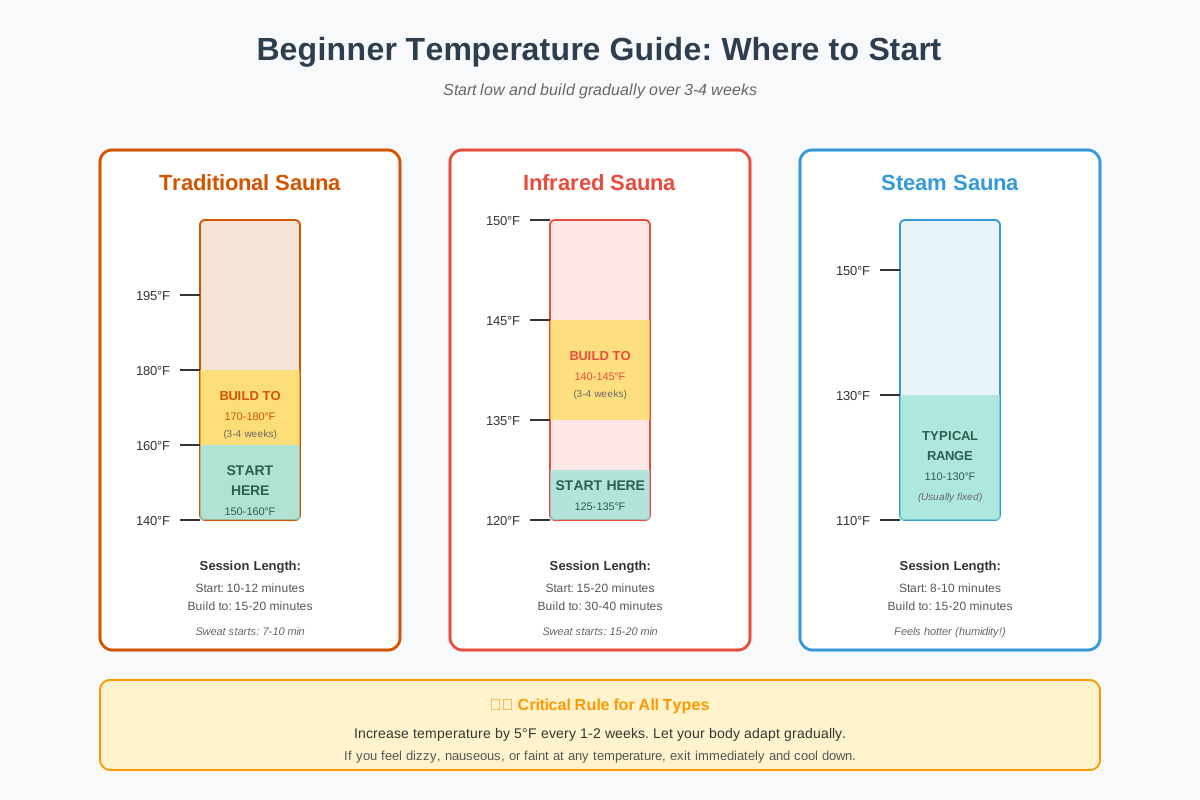
Here’s what surprised me: the three main sauna types create these responses through completely different mechanisms. Traditional saunas heat the air around you to 170-195°F, creating intense environmental heat stress. Infrared saunas use wavelengths that penetrate your tissue directly, heating your body at lower air temperatures of 120-150°F. Steam saunas combine moderate heat (110-150°F) with high humidity, which makes the temperature feel more intense than it actually is.
💡Related Reading: Learn more about optimal sauna temperatures
The biggest misconception beginners have? Thinking hotter always equals better benefits. After experimenting systematically with different temperatures over 25 years, I learned that consistency at a comfortable temperature beats occasional sessions at extreme heat. Your body adapts to regular heat exposure, but that adaptation takes time. Trying to match what experienced users do on your first attempt is exactly how I ended up overwhelmed in that 190°F sauna.
Another myth worth clearing up: you don’t need to suffer to get benefits. Research shows that moderate temperatures used regularly provide similar cardiovascular and longevity benefits to extreme heat. The key is finding a temperature where you can actually complete full sessions multiple times per week, not pushing yourself to the edge of tolerance once in a while.
⚠️ Reality Check: Temperature Tolerance Takes Time
My first session: 190°F for 8 minutes = Completely overwhelmed. My current routine: 180°F for 20 minutes = Comfortable and sustainable. The difference? Twenty-five years of gradual adaptation. Don’t try to match what experienced users do on day one. Start 20-30°F below what you think you can handle, and build up over weeks. Your body needs time to develop heat tolerance.
Your First Sauna Session: A Realistic Timeline
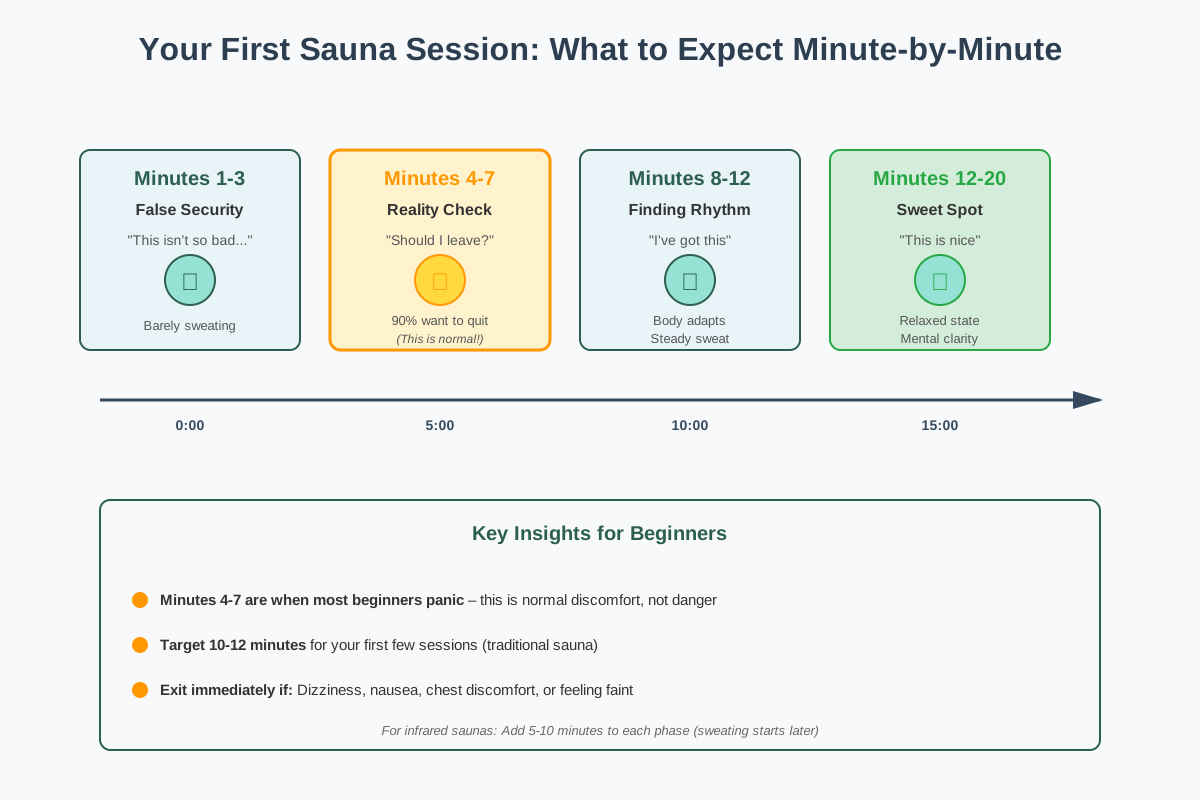
This is what nobody tells you about how to use a sauna for the first time. Everyone talks about the benefits, but no one describes what it actually feels like minute by minute. Here’s the honest breakdown based on my experience and what I’ve learned helping others get started.
Minutes 1-3: The False Sense of Security
You walk in, sit down, and think, “This isn’t so bad.” The temperature feels warm but manageable, almost like a hot summer day. You might not even be sweating yet. This is the stage where beginners often get overconfident and don’t prepare properly for what’s coming.
What’s happening: Your body hasn’t fully registered the heat stress yet. Surface blood vessels are starting to dilate, but core temperature is only beginning to rise.
Minutes 4-7: The Reality Check
This is when most beginners panic. Sweat starts flowing more freely. Your heart rate picks up noticeably. The heat that felt manageable suddenly feels intense. You become very aware of your breathing. If you’re in a traditional sauna at 180°F or higher, this phase hits hard and fast. In an infrared sauna at 140°F, the buildup is more gradual.
What’s happening: Your cardiovascular system is ramping up significantly. Blood is rushing to your skin’s surface. Your cooling mechanisms are fully engaged. This is actually when the beneficial heat stress begins.
Why beginners struggle here: You haven’t experienced this sensation before, so you can’t tell if it’s normal discomfort or something wrong. You start questioning whether you should push through or get out. This uncertainty creates anxiety that makes the heat feel even more intense.
My advice: If you’re not feeling dizzy, nauseous, or having chest discomfort, you’re fine. This is supposed to feel challenging. Try deep, steady breathing. Change positions if you need to (sitting versus lying down can help). But know that this phase passes.
Minutes 8-12: Finding Your Rhythm
If you push past the 7-minute mark, something interesting happens. Your body settles into the experience. Sweating becomes steady rather than overwhelming. Your heart rate plateaus instead of continually climbing. The mental resistance fades. This is where the stress relief and mental clarity benefits start kicking in.
What’s happening: Your body has adapted to the current heat load. Homeostatic mechanisms have stabilized. Endorphins may be starting to release, creating that subtle sense of well-being many people describe.
This was my breakthrough moment after that overwhelming first session. On my fourth or fifth attempt, I made it to 10 minutes and suddenly understood why people love saunas. The discomfort transformed into something almost meditative.
Minutes 12-20: The Sweet Spot
This is where experienced users spend most of their time. Sweating is strong but steady. Mental chatter quiets down. Time perception changes. Many people find this phase deeply relaxing, almost trance-like. In traditional saunas, 20 minutes is typically my maximum before diminishing returns. In infrared saunas, I can comfortably extend to 30-40 minutes because the lower temperature makes this phase more sustainable.
What to watch for: Even experienced users need to stay alert. Dizziness, lightheadedness, nausea, or feeling faint means exit immediately. Don’t try to push through these symptoms. They’re your body saying it’s had enough.
For your first session, I’d recommend targeting 10-12 minutes in a traditional sauna or 15-20 minutes in an infrared sauna. You can always build up from there. Walking out feeling good beats pushing too hard and dreading your next session.
Addressing Your Real Concerns (The Questions Everyone Has But Doesn’t Ask)
“Will I Pass Out or Get Dizzy?”
This was my biggest fear before my first sauna, and it’s completely valid. The honest answer: you might feel lightheaded if you stay too long, get up too quickly, or aren’t properly hydrated. But actual fainting is rare if you follow basic guidelines.
After 25 years, here’s what I’ve learned about managing dizziness: It usually happens when standing up abruptly after sitting for 15+ minutes. Your blood pressure drops temporarily because blood has pooled in dilated vessels near your skin. The fix is simple: stand up slowly, in stages. Sit on the edge of the bench for 30 seconds before standing. Then stand while holding onto something for another 30 seconds before walking.
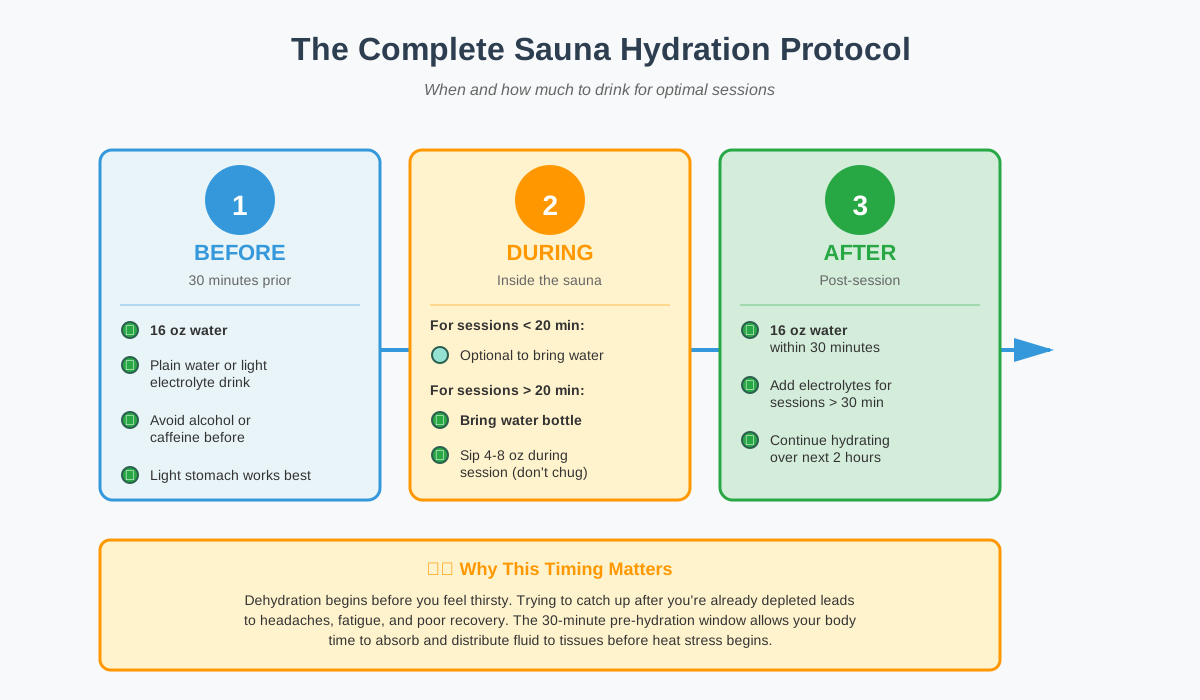
Dehydration is the other major cause. I learned this the hard way during my infrared sauna years. I’d sometimes skip pre-hydration and pay for it with headaches and excessive fatigue. Now I drink about 16 ounces of water the 30 minutes working up to before every session. For sessions longer than 20 minutes, I bring water into the sauna and sip throughout.
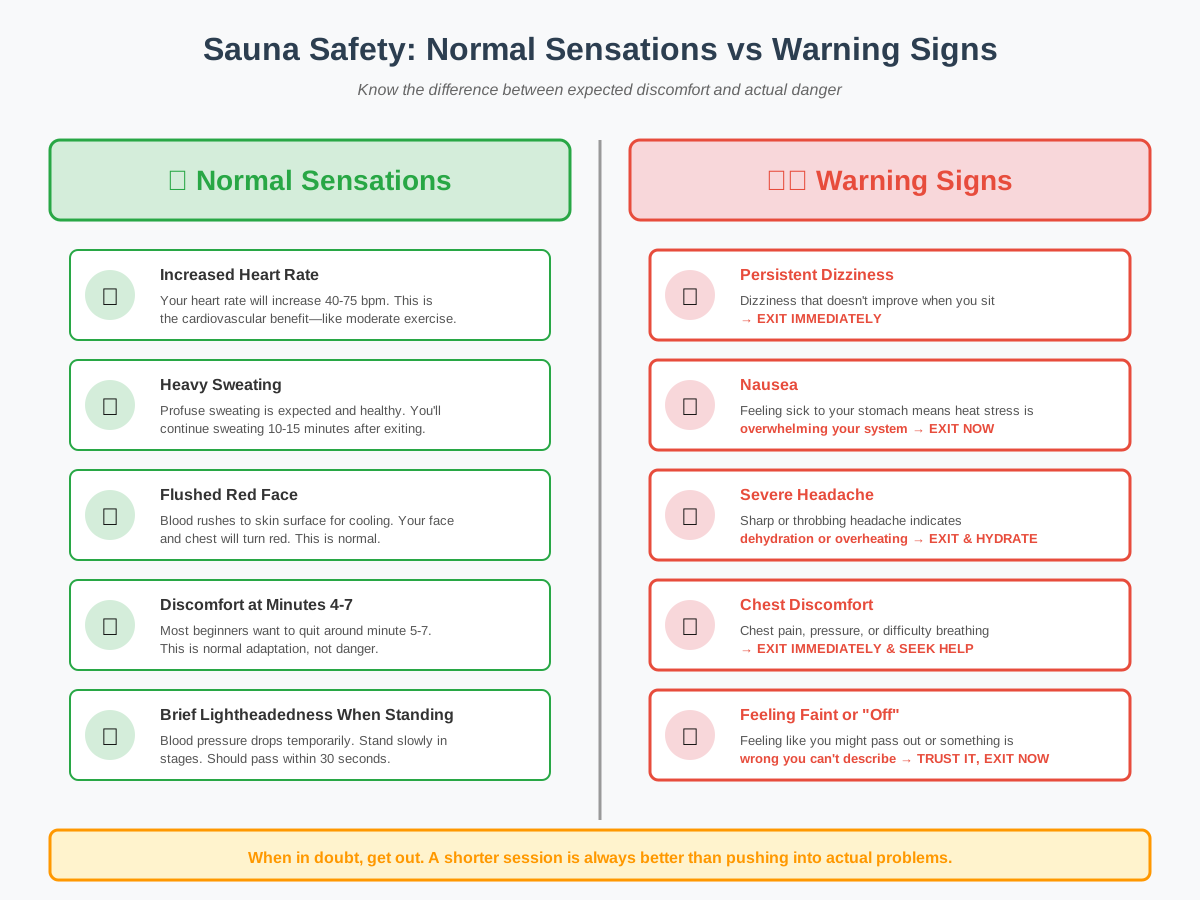
Real warning signs that mean exit immediately: Sudden dizziness that doesn’t improve when you sit back down, nausea, feeling faint, chest discomfort, or severe headache. These aren’t “push through” situations. They’re your body saying the heat stress is too much right now.
“What If I’m Doing It Wrong and Look Foolish?”
I get it. I felt incredibly self-conscious in that first co-ed gym sauna. Here’s the truth that took me years to accept: nobody is watching you or judging your sauna technique. Everyone else is focused on their own experience, managing their own heat tolerance, and probably worried about the same things you are.
That said, there are some basic sauna etiquette rules worth knowing, especially in shared spaces. It’s a good idea to bring a towel to sit on (this is universal sauna etiquette in most cultures). Shower before entering, especially at nicer facilities. Keep conversation minimal and voices low if others are present. Don’t pour water on rocks without asking (in traditional saunas) because it dramatically increases perceived heat. Enter and exit quickly to minimize heat loss for others.
What you wear depends on the setting. In gender-specific saunas at nicer spas or Scandinavian-style facilities, nudity is often the norm (covered with your sitting towel). In co-ed gym saunas, swimsuits or workout clothes are standard. Home saunas? Whatever makes you comfortable. I usually wear lightweight athletic shorts in mine. For your first time in a new facility, observe what others are doing or ask staff if you’re uncertain.
“How Do I Know When to Leave?”
This question plagued me for months when I was starting out. The answer isn’t based on a timer. It’s based on how you feel.
Good reasons to end your session: You’ve reached your target time (10-15 minutes for beginners) and feel pleasantly warm and relaxed. You’ve worked up a solid sweat and feel like you’ve gotten the benefit you came for. You’re starting to feel ready to cool down.
Immediate exit signals: Dizziness that persists, nausea, feeling faint, severe headache, chest discomfort, excessive rapid heartbeat, or just feeling “off” in a way you can’t describe. Trust these signals. Your body knows.
The tricky middle ground: Moderate discomfort, restlessness, or the urge to quit around minutes 5-7. This is where experience helps. If you’re not experiencing any warning signs, this is usually just psychological resistance to the unfamiliar sensation. Taking a few deep breaths and giving it another couple minutes often pushes you through to the more comfortable phase.
My rule after 25 years: When in doubt, get out. A slightly shorter session is always better than pushing too hard and either hurting yourself or creating negative associations that make you not want to return.
“Is It Normal to Feel This [Strange Sensation]?”
Yes. The sauna creates unusual sensations that can alarm first-timers who don’t know they’re normal.
Your face will flush bright red. This is normal. Blood is rushing to your skin’s surface for cooling.
Your heart will beat noticeably faster. This is normal and actually part of the cardiovascular benefit. Your heart rate might increase 40-75 beats per minute depending on the temperature.
You’ll feel slightly dizzy when you first stand up. This is normal if it passes quickly. See the earlier guidance about standing up slowly.
Your skin might tingle or feel prickly. This is normal. It’s related to blood vessel dilation and activation of sweat glands.
You’ll continue sweating for 10-15 minutes after exiting. This is normal and why you shouldn’t shower immediately. Your body needs time to complete its cooling process.
Not normal: Severe dizziness, nausea, chest pain, extreme difficulty breathing, or feeling like you might pass out. These require immediate exit and cooling down.
Three Types of Saunas: Quick Comparison
cardiovascular benefits
meditation, longer sessions
deep relaxation, skin health
The Three Types of Saunas You’ll Actually Encounter (And How to Use Each One)
Most beginners don’t get to choose their first sauna type. You use whatever is available at your gym, spa, or hotel. Using an infrared vs traditional sauna as well as the differences with steam saunas require a slightly different approach, and understanding these differences prevents the mistakes I made when switching between them.
Traditional Dry Saunas (170-195°F): What You’ll Find at Most Gyms
This is probably where you’ll have your first experience. Traditional saunas heat the air around you using a stove (electric or wood-burning) topped with rocks. The result is intense, immediate heat that makes you sweat quickly.
How to use it: Start with 10-12 minutes maximum for your first few sessions. Sit on a lower bench where it’s cooler (heat rises significantly in traditional saunas). The difference between the top and bottom bench can be 20-30 degrees. Bring a towel to sit on and another for wiping sweat. If someone pours water on the rocks (called löyly in Finnish tradition), be prepared for a sudden intensity increase that can feel overwhelming if you’re not expecting it.
Temperature guidance: If you can adjust the temperature (rare in shared saunas), start around 160°F. The gym I use now keeps theirs at 180°F, which works perfectly for me after years of adaptation, but that would have been difficult to me as a beginner.
Time to sweat: You’ll start sweating within 7-10 minutes. By 15 minutes, you’ll be dripping. The intensity makes longer sessions challenging for most people.
What I learned: Traditional saunas deliver the most robust cardiovascular stimulus in the shortest time. Twenty minutes gives me everything I need. When I was using my infrared sauna regularly, traditional saunas felt almost too intense. Now that I’ve re-adapted, they’re my preference for time efficiency.
Infrared Saunas (120-150°F): Growing in Gyms and Spas
These look similar to traditional saunas but use infrared panels to heat your body directly rather than heating the air around you. The temperature is significantly lower, but don’t assume that means easier.
How to use it: Plan for longer sessions, 20-30 minutes minimum. You need to give the infrared wavelengths time to penetrate tissue and create the warming effect. Position yourself so your body is facing the infrared panels directly. Rotating position halfway through helps ensure even heat distribution.
Temperature guidance: Start around 130°F. My first infrared session at 130°F produced almost no sweat and felt underwhelming. I bumped it to 140°F for my following attempts and that made all the difference. Most people find their sweet spot between 135-145°F.
Time to sweat: Expect 15-20 minutes before you really start sweating heavily. This delayed response confused me initially and made me think something was wrong. It’s normal. Infrared saunas work differently.
What I learned: Infrared saunas are more forgiving for beginners. The gentler heat means you’re less likely to overdo it. They’re also better for reading or meditating because the milder air temperature is less mentally demanding. The tradeoff is time. My infrared routine took 90+ minutes from preheat to post-shower, compared to 60 minutes for traditional saunas.
Steam Saunas (110-150°F): The Underestimated Option
Steam saunas are often overlooked in sauna discussions, but they’re common in gyms and hotel wellness centers. The combination of heat and humidity creates a different experience that some people actually prefer.
How to use them: Don’t be deceived by the lower temperature reading. Humidity makes heat feel dramatically more intense. Start with 10-15 minutes maximum. The moisture in the air makes breathing feel different, almost thick. Some people love this, others find it claustrophobic. You’ll know within a few minutes which camp you’re in.
Temperature guidance: Most commercial steam rooms run between 110-120°F. You can’t usually adjust this. Despite the moderate temperature, the humidity makes it feel as intense as a 160°F dry sauna.
Time to sweat: Immediate. The humidity prevents sweat from evaporating, so you feel wet within minutes.
What I learned: I used portable steam saunas at home for about two years. They work surprisingly well for the price ($150-300). The downside is maintenance. The moisture means you need to clean them every 1-2 weeks to prevent mildew. I’d recommend putting 2-3 towels on the floor inside to absorb dripping moisture, then dry them between sessions. This simple trick prevented most of the mildew issues.
⚠️ Reality Check: Time Investment
Traditional saunas win on time efficiency thanks to their higher temperatures. A typical session runs just 15-20 minutes, while you’d need to commit 35-40 minutes in an infrared sauna for comparable results. The advantage boils down to this: hotter temperatures mean shorter sessions. This is why my infrared routine eventually fell apart during busy periods.
| If You’re Looking For… | Best Sauna Type | Why |
|---|---|---|
| Complete Beginner Never used a sauna before | Infrared Sauna | Gentler heat (130-140°F) makes first experience less overwhelming. Easier to build tolerance gradually. |
| Time Efficiency Busy schedule, need quick sessions | Traditional Sauna | 20-minute sessions deliver full benefits. Total time commitment: 45-60 minutes vs 90+ for infrared. |
| Post-Workout Recovery Muscle soreness, athletic training | Traditional Sauna | Robust cardiovascular stimulus accelerates recovery. Can be done efficiently after gym workouts. |
| Chronic Pain Relief Targeted tissue pain, long-term tension | Infrared Sauna | Longer sessions (30-40 min) with direct tissue penetration. Better for sustained, targeted relief. |
| Meditation & Relaxation Want to read, meditate during sessions | Infrared Sauna | Milder air temperature (140°F) allows comfortable extended sessions for reading or meditation. |
| Stress Relief & Mental Reset High stress, need forced mindfulness | Traditional Sauna | Intense heat demands present-moment attention. Contrast between intensity and post-sauna calm is profound. |
| Budget Conscious Want to try before major investment | Gym Membership or Day Pass (Or consider a portable steam sauna) | Test different types for $10-100 before spending $2,000-$10,000 on home equipment. |
| Sleep Improvement Want better sleep quality | Traditional Sauna (Midday) | Most dramatic sleep improvements when timed 6-8 hours before bedtime. Traditional delivers stronger effect. |
| Respiratory Benefits Want steam for breathing | Steam Sauna | Humidity provides unique respiratory benefits. Budget-friendly portable options available for $150-500. |
Preparing for Your First Session: The Checklist That Actually Matters
Generic guides tell you to “hydrate and bring a towel.” Let me give you the detailed protocol I wish someone had shared with me.
30-60 Minutes Before
Drink around 16 ounces of water. Not right before (you don’t want a sloshing stomach), but early enough that your body has time to hydrate tissues. I learned this timing through trial and error. Drinking water 10 minutes before didn’t prevent dehydration headaches. Drinking 30 minutes before did.
Eat lightly if at all. An empty or near-empty stomach is significantly more comfortable. Heavy meals make you feel sluggish in the heat and can sometimes cause nausea. If you need something, a small snack 60-90 minutes before works fine.
Plan your timing. Morning or midday sessions work best for most people. Evening sessions too close to bedtime can disrupt sleep by keeping your core temperature elevated. I learned this the hard way. Sessions after 6 PM often left me feeling overly hot when I wanted to sleep, not having enough time to fully cool down.
What to Bring
Two towels recommended. One to sit on and one for wiping sweat.
Water bottle for sessions longer than 20 minutes. Sipping water during the session helps maintain hydration, especially in infrared saunas where you’re in longer.
What to wear: Depends on the setting (covered earlier), but less is generally better for heat transfer and comfort. Remove all jewelry, watches, and glasses. Metal gets uncomfortably hot. Contacts can dry out in the heat. I wear contacts and it’s fine for me, but just something to be aware of.
Entertainment (optional): In infrared saunas where I’m in for 35-40 minutes, I sometimes bring my phone or iPad. Traditional saunas are too hot for me to focus on reading and also not recommended for your devices. Your mileage may vary.
What to Leave Behind
Expectations of instant transformation. The first session might be challenging. Benefits accumulate over weeks of consistent use, not in a single session.
Comparisons to others. Someone else staying 30 minutes in a 180°F sauna doesn’t mean you should attempt the same on your first try.
⚠️ Reality Check: The Hydration Protocol That Actually Works
I used to think drinking water after my session would be sufficient, but I learned that it didn’t work the best for me. Sometimes I would feel dehydrated for the rest of the day. And, sometimes I would get a headache or just feel wiped out.
The protocol that works: 16 oz water 30 minutes before (not right before), sip water during sessions longer than 20 minutes, and another 16 oz after (within an hour). For sessions over 30 minutes or combined with workouts, you may want to add an electrolyte powder to your water. This timing made the difference between feeling great and getting dehydration headaches. Keep in mind that your body will get better at adapting over time and you’ll begin to listen to your body signals better the more you do it.
Building Your Sauna Practice: From First Timer to Consistent User
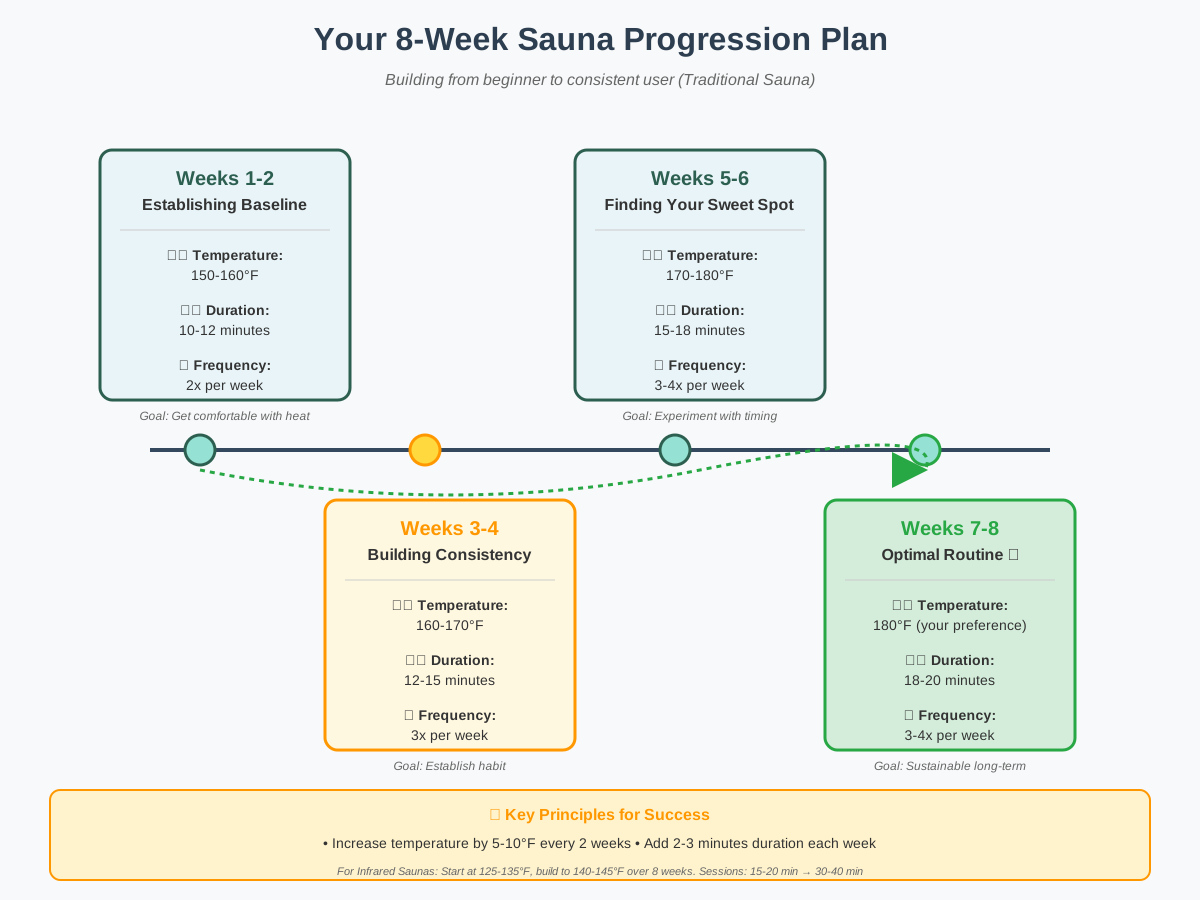
The gap between trying a sauna once and building a sustainable practice is where most people struggle. Here’s the graduated approach that worked for me and what I recommend based on 25 years of experimentation.
Weeks 1-2: Establishing Baseline Tolerance
Goal: Get comfortable with the basic sauna experience without pushing too hard.
Frequency: 2 times per week, non-consecutive days (Monday and Thursday, for example).
Duration:
- Traditional sauna: 10-12 minutes
- Infrared sauna: 15-20 minutes
- Steam room: 10 minutes
Temperature:
- Traditional: 150-160°F (if adjustable)
- Infrared: 130-135°F
- Steam: Whatever the facility provides (usually 110-120°F)
Focus: Notice how your body responds. How quickly do you start sweating? What sensations are you experiencing? How do you feel in the hours after?
This is pure exploration. Don’t worry about “doing it right” or maximizing benefits. You’re gathering data about your personal response to heat.
Weeks 3-4: Increasing Duration and Consistency
Goal: Extend your time in the heat and establish more consistent habits.
Frequency: 3 times per week
Duration:
- Traditional sauna: 12-15 minutes
- Infrared sauna: 20-25 minutes
- Steam room: 12-15 minutes
Temperature:
- Traditional: 160-170°F (if adjustable)
- Infrared: 135-140°F
- Steam: Standard facility temperature
Focus: Build the habit of regular sessions. Add sauna to your calendar like any other wellness practice. Pay attention to cumulative effects. Is your skin changing? Sleep quality? Recovery from workouts?
Weeks 5-8: Finding Your Optimal Protocol
Goal: Dial in the routine for how often you should use a sauna that works best for your body and schedule.
Frequency: 3-4 times per week (my sweet spot after extensive testing)
Duration:
- Traditional sauna: 15-20 minutes
- Infrared sauna: 30-40 minutes
- Steam room: 15-20 minutes
Temperature:
- Traditional: 170-180°F (if adjustable)
- Infrared: 140-145°F
- Steam: Standard facility temperature
Focus: Experiment with variables. Try morning versus evening sessions. Test different temperatures in 5-degree increments if you have control. Notice which combinations deliver the benefits you’re seeking (better sleep, stress relief, recovery, etc.).
This is when you’ll discover your personal preferences. I found that 180°F traditional saunas for 20 minutes, used 3-4 times per week during lunch breaks, delivered optimal results for my goals. Your ideal protocol might look completely different.
⚠️ Reality Check: Consistency Beats Intensity
I’ve tested everything from daily sessions to sporadic use over 25 years.
Here’s what actually works: 3-4 sessions per week, maintained consistently for months, delivers more benefits than 7 sessions one week followed by nothing for a month. After 2-3 weeks of consistent use, I noticed improvements in skin quality, sleep, and stress levels. Stop for 2-3 weeks and those benefits faded. The sauna isn’t a magic bullet. It’s a practice that rewards regularity, not heroic occasional efforts.
Customizing Your Approach: Different Goals Require Different Strategies
For Complete Beginners (Never Used a Sauna)
Start with the most forgiving option available to you. If you have access to an infrared sauna, that’s ideal for first-timers. The gentler heat makes the experience less overwhelming. If traditional is your only option, begin at the coolest spot (lowest bench, farthest from the heater) and keep first sessions short (8-10 minutes).
Go with a friend if possible. Having someone with you reduces anxiety and provides a safety backup. Plus, comparing experiences afterward helps you realize that everyone struggles with the same sensations initially.
Consider day passes or short-term gym memberships before committing to equipment purchases. I recommend trying saunas 5-10 times before deciding whether to invest in a home unit. This relatively small investment (maybe $50-100 total) prevents the expensive mistake of buying equipment you don’t end up using.
For Recovery and Muscle Soreness
Use sauna sessions within 2-4 hours after workouts when possible. This timing seems to enhance recovery most effectively in my experience. The increased blood flow helps deliver nutrients to damaged tissue and remove metabolic waste.
Moderate temperatures for longer durations work better than extreme heat for recovery. In traditional saunas, 160-170°F for 20 minutes. In infrared saunas, 140-145°F for 30-40 minutes. The goal is sustained heat exposure that increases blood flow without adding excessive stress to an already stressed system.
Pay special attention to hydration and electrolytes when combining intense exercise with sauna use. Your fluid and mineral losses are significant. It may be worth considering adding an electrolyte powder to your post-sauna water on workout days.
For Stress Relief and Mental Clarity
This is where traditional saunas particularly shine in my experience. The intense heat demands your attention, forcing you out of rumination and into present-moment awareness. It’s almost like forced mindfulness.
Timing matters enormously. Midday sessions work best for me. Morning sessions sometimes left me feeling drained. Evening sessions too close to bedtime interfered with sleep. Find your window through experimentation, but 11 AM – 3 PM is a good starting range to test.
Consider extending cooldown periods. After intense stress, rushing through the post-sauna shower and immediately back to work defeats the purpose. I take it easy for 10-15 minutes after exiting, letting my heart rate normalize naturally before showering. This extended recovery period seems to deepen the stress relief benefits.
For Sleep Improvement
This requires the most careful timing. Heat exposure too close to bedtime (within 4-6 hours) can actually disrupt sleep by keeping core temperature elevated when your body is trying to cool down for rest.
My breakthrough came from systematic testing. I tracked sleep quality with different sauna timing windows. Morning sessions (7-9 AM) had minimal impact. Midday sessions (11 AM – 2 PM) produced the most consistent sleep improvements. Evening sessions (after 6 PM) often disrupted sleep, especially traditional saunas which create more heat stress.
Your optimal window might differ, but the principle holds: your core temperature needs sufficient time to return to baseline before sleep. For most people, this means sauna sessions should end at least 6 hours before bedtime.
When You’re Dealing with Time Constraints
If time is your limiting factor, traditional saunas can be more time efficient since your in-session time is almost half of what an infrared session would be, about 15-20 minutes. Compare that to infrared where your in-session time is more like 35-40 minutes. All other things are pretty much equal; drive time if going to a gym, cool down, shower. The real time savings is in using high heat for a shorter period.
When my infrared routine started falling apart during busy periods, I initially blamed myself for lack of discipline. The real problem was trying to maintain a routine that didn’t fit my reality.
Short on time but want consistency? Even 12-15 minute traditional sauna sessions 3-4 times per week deliver meaningful benefits. Perfection isn’t the goal. Consistency is.
5 Most Common Beginner Mistakes (And How to Avoid Them)
- • Start at beginner temps (150-160°F traditional)
- • Hydrate 30 min before every session
- • Listen to your body’s signals
- • Allow proper cooldown time
- • Maintain 3-4 sessions per week
Common Mistakes That Set Beginners Back (And What I Learned the Hard Way)
Mistake 1: Jumping Into Extreme Temperatures Too Quickly
This was literally my first mistake back in 1999. Walking into a 190°F sauna with zero heat adaptation was foolish. I felt overwhelmed, questioned whether saunas were for me, and almost didn’t try saunas again.
Why beginners make this mistake: Eagerness to match what experienced users do, combined with not understanding that heat tolerance is built gradually over weeks and months.
How to avoid it: Start 20-30 degrees below whatever you think you can handle. If the facility sauna is set at 180°F and you can’t adjust it, sit on the lowest bench and keep your first session under 10 minutes. Build from there.
Mistake 2: Inadequate Hydration
We covered this a little earlier. Dehydration begins before you even feel thirsty, and trying to catch up after you’re already depleted leads to headaches, fatigue, and poor recovery.
Why beginners make this mistake: The 30-minute pre-hydration window feels inconvenient. You want to just walk in and start. But sauna use is heat stress, and your body needs adequate fluid reserves to manage that stress safely.
How to avoid it: Drink around 16 ounces of water 30 minutes before every session. Bring water into the sauna for sessions longer than 20 minutes. Drink another 16 ounces after.
Real indicator you’re dehydrated: Headache during or after the session, excessive fatigue, dizziness that persists after cooling down, dark urine in the hours following.
Mistake 3: Ignoring Your Body’s Warning Signals
During my infrared sauna years, I sometimes pushed through discomfort or thirst because I wanted to complete my planned 40-minute session. This was not a good idea. A few times I ended up feeling worn out for the rest of the day.
Why beginners make this mistake: Confusion about what’s normal discomfort versus actual warning signs. Fear of “failing” or not getting full benefits if you exit early.
How to avoid it: Learn the difference between regular discomfort (increased heart rate, heavy sweating, feeling very warm) and warning signals (dizziness that doesn’t improve, nausea, severe headache, feeling faint). One is expected. The other requires immediate exit. When in doubt, get out. A shorter session beats pushing into actual problems.
Mistake 4: Not Allowing Sufficient Cooldown Time
I used to rush from the sauna straight into a cool shower, get dressed, and head out. This created problems. You continue sweating steadily for 10-15 minutes after exiting as your body completes its cooling process. Showering immediately made me feel like I wasn’t clean afterward. I was still sweating after the shower and didn’t like how that felt. Its better just to build in time to cool down.
Why beginners make this mistake: Impatience, not realizing that post-sauna processes are part of the routine, treating the shower as the endpoint rather than part of a larger cycle.
How to avoid it: After exiting the sauna, sit or lie down in a cooler area for 10-15 minutes. Let your heart rate normalize. Let the sweating taper off naturally. Then shower. This more patient approach makes the whole experience more pleasant and seems to deepen the stress relief benefits.
Mistake 5: Inconsistent Frequency
This might be the most common mistake. Trying sauna once, feeling good, then not going back for two weeks. Or going hard with daily sessions for a week, then nothing for a month. I fell into this pattern repeatedly during my early years.
Why beginners make this mistake: Treating sauna as an occasional treat rather than a regular practice. Not recognizing that benefits accumulate over weeks of consistency.
How to avoid it: Schedule sauna sessions like any other wellness practice. Put them in your calendar. Commit to a minimum frequency (2-3 times per week) even during busy periods. Three sessions per week maintained for months beats seven sessions one week and then nothing for a month.
The pattern I observed repeatedly in my own experience: consistent use for 2-3 weeks and I’d notice improvements in skin quality, sleep, and stress levels. Stop for 2-3 weeks and those benefits would fade. It’s definitely a practice that rewards consistency.
Your Action Plan: Getting Started This Week
Okay, time for action. Here’s your practical roadmap for actually trying a sauna and beginning to build the habit.
Step 1: Find Your Sauna (This Week)
Check if your gym has a sauna. Call ahead to confirm the type (traditional or infrared) and hours. Ask what the temperature is typically set to.
No gym membership? Look for day spas, Korean spas, or wellness centers that offer day passes. A single visit usually costs $10-30. Some hotel wellness centers also allow day access for a fee like Resort Pass.
If buying home equipment: First, try using a sauna 5-10 times first. This will save you some time and money and more importantly will tell you if this is something that you want to invest in for yourself. After this you are ready to move on to buying.
Step 2: Schedule Your First Session (Within 3 Days)
Pick a specific date and time. Add it to your calendar. Commit to it like any other appointment.
Choose a time when you’re not rushed. Your first session should feel exploratory, not squeezed between obligations.
Plan for 60-75 minutes total (including changing, the session itself, cooldown, shower, and getting dressed). First sessions take longer because you’re figuring out the routine.
Step 3: Prepare Properly (Day Of)
Checklist:
- Drink 16 oz water 30 minutes before
- Pack 2 towels (one to sit on, one for sweat)
- Pack water bottle
- Wear or bring swimsuit or workout clothes
- Remove all jewelry before entering
- Use bathroom before starting
Mental preparation:
- Remember that 10 minutes is a success for your first session
- Discomfort between minutes 4-7 is normal
- You can exit anytime if you feel any warning signs
- This is exploration, not a test
Step 4: During Your First Session
Start on the lowest bench if using a traditional sauna (coolest position). If using infrared or steam, position yourself comfortably and facing panels.
Set a mental target of 10 minutes. This is your minimum acceptable session.
Pay attention to:
- How quickly you start sweating
- When the heat starts feeling intense (usually around minute 5-7)
- How your body feels after pushing past that initial discomfort
- Any warning signs (dizziness, nausea, severe discomfort)
If you hit 10 minutes and feel good, great. If you need to exit at 8 minutes because you’re uncomfortable, that’s also fine. You’re gathering data.
Step 5: Post-Session Protocol
After exiting, sit quietly for 10-15 minutes. Don’t rush. Let your heart rate come down naturally. Let the sweating taper off.
Then shower. Cool or lukewarm water is usually more comfortable than cold (though some people love cold showers post-sauna). Avoid very hot showers immediately after as this continues stressing your thermoregulatory system.
Drink another 16 oz of water after dressing.
Step 6: Evaluate and Adjust (Same Day)
Within a few hours of your first session, take mental notes:
- How do you feel? Relaxed? Energized? Drained?
- Did any part feel particularly difficult?
- Did you experience any warning signs you’ll watch for next time?
- Would you do another session?
This evaluation guides your second session adjustments. Too intense? Start with 8 minutes next time or choose a cooler position. Felt underwhelming? Try 12-15 minutes or a warmer position.
Step 7: Plan Your Second Session (Within a Week)
Don’t wait too long. Schedule your second session within 5-7 days. Momentum matters for habit formation.
Use your first session learnings to adjust:
- Add or subtract 2-3 minutes based on how the first felt
- Adjust position if temperature was too intense or too mild
- Refine your timing (try a different time of day if recovery was poor)
Commit to three sessions total before deciding whether sauna use is for you. One session isn’t enough data.
Signs Your Routine Is Working
After 3-4 weeks of consistent sessions (3+ times per week), you should start noticing changes. Here’s what to look for:
Immediate indicators (during and right after sessions):
- You’re sweating more quickly than in early sessions
- The initial discomfort phase (minutes 4-7) is less intense
- You can comfortably complete your target duration
- Post-session you feel relaxed rather than wiped out
Cumulative benefits (after 2-4 weeks):
- Skin quality improves (more hydrated, healthy glow)
- Sleep quality increases (falling asleep faster, sleeping more soundly)
- Stress resilience improves (daily stressors feel more manageable)
- Recovery from workouts improves (less next-day soreness)
When I stopped using my infrared sauna during a busy period, I noticed changes within 2-3 weeks. My skin became drier and flaky. Energy levels dropped subtly. I felt less resilient to stress. This confirmed that regular sauna use was delivering real, measurable benefits for me.
Signs You Need to Change Your Approach
Physical warning signs:
- Persistent headaches after sessions (likely dehydration or pushing too hard)
- Extreme fatigue that lasts hours (temperature or duration too high)
- Skin irritation or rashes (could be heat sensitivity or hygiene issue)
- Sleep disruption on sauna days (timing likely too close to bedtime)
When these appear: Reduce temperature by 10-15 degrees, cut session duration by 5 minutes, or increase hydration significantly. If problems persist after adjustments, consult with a healthcare provider.
Habit indicators:
- You’re consistently finding excuses to skip sessions
- The time commitment feels unsustainable
- You dread sessions rather than looking forward to them
When these appear: Your routine doesn’t fit your life. Traditional saunas are more time-efficient than infrared. Shorter, more frequent sessions might work better than longer, less frequent ones. Location might be too inconvenient. Address the friction points rather than fighting them with willpower.
Common Questions About Using a Sauna
Start with 10-12 minutes in a traditional sauna or 15-20 minutes in an infrared sauna for your first few sessions. This gives your body time to adapt to heat stress without overwhelming your systems. After 2-3 weeks of consistent use, you can gradually increase duration by 2-3 minutes per week. Most people find their sweet spot around 15-20 minutes for traditional saunas and 30-40 minutes for infrared saunas. Listen to your body rather than following arbitrary time targets.
This depends entirely on the setting and your comfort. In gender-specific saunas at upscale spas or Scandinavian facilities, nudity (with a towel to sit on) is common and expected. In co-ed gym saunas, swimsuits or athletic shorts are standard. Home saunas offer complete flexibility, wear whatever feels comfortable. I usually wear just light athletic shorts in my home sessions. Whatever you choose, less clothing generally means better heat transfer and more comfortable sweating. Always bring a towel regardless of what you’re wearing.
Bring two towels: one towel to sit on (this is essential sauna etiquette in shared spaces) and one for wiping sweat. For sessions longer than 20 minutes, bring a water bottle to sip during the session. Remove all jewelry, watches, and electronics before entering (metal gets hot, electronics can be damaged by heat and moisture). If you wear contacts, consider removing them as they can dry out in the heat. For infrared saunas where you’re inside longer, some people bring books or phones, though I find the heat makes it hard to concentrate on reading in traditional saunas.
You can, but I’d recommend building up gradually. Daily use creates significant cumulative heat stress that your body needs time to adapt to. Start with 2-3 times per week for the first month. After your body has adapted, you can experiment with increasing frequency if desired. Personally, I found that 3-4 times per week delivered optimal benefits. Daily use felt exhausting and unsustainable. Research suggests benefits come from regular exposure, not necessarily daily exposure. Listen to your energy levels and recovery quality.
Mild lightheadedness when standing up after 15+ minutes is normal and caused by temporary blood pressure changes. Blood pools in dilated vessels near your skin, creating a brief drop in blood pressure when you stand. This is easily managed by standing up slowly in stages (sit on edge of bench for 30 seconds, then stand while holding something for another 30 seconds). However, sudden or persistent dizziness while sitting, severe dizziness, or dizziness accompanied by nausea requires immediate exit from the sauna. These are warning signs that heat stress is overwhelming your system.
Both, ideally. A quick rinse before entering a sauna (especially in shared facilities) is good hygiene and helps open pores. After your sauna session, wait 10-15 minutes for your body to complete its cooling process and sweating to taper off, then shower properly. I learned this timing the hard way. Showering immediately after exiting means you’re still sweating heavily and don’t actually get clean. The 10-15 minute cooldown period makes the shower more effective and feels less rushed.
For traditional saunas, start at 150-160°F if you can control it, or sit on the lowest bench if the temperature is fixed. For infrared saunas, start at 130-135°F. For steam saunas, you typically can’t control temperature, so keep first sessions short (10 minutes max). These moderate starting points allow your body to adapt gradually. After 2-3 weeks, you can increase temperature in 5-degree increments. My first session at 190°F was overwhelming because I had no heat adaptation. Starting at 150-160°F and building up over weeks would have made the experience far more pleasant.
Honestly, there are very few ways to “do sauna wrong” as long as you’re following basic safety guidelines. If you’re hydrating properly, listening to warning signs, and not pushing past actual distress (as opposed to discomfort), you’re doing it right. The most common mistake is pushing too hard too fast, trying to match what experienced users do. Another common error is inconsistent frequency, which prevents you from building heat tolerance and experiencing cumulative benefits. If your sessions leave you feeling good rather than overly tired, and you’re able to maintain consistency, you’re on the right track.
It is recommended to sit on a towel, never directly on the wood (this is near-universal sauna etiquette). Shower before entering shared saunas. Keep conversation minimal and voices low. Don’t pour water on hot rocks without asking others first, as it dramatically increases heat intensity. Enter and exit quickly to minimize heat loss. Respect others’ space and experience, most people are there for relaxation or meditation, not socializing. In home saunas, these rules matter less obviously, but the towel practice is still recommended to protect the wood and for hygiene.
Start with 2 times per week, with at least one rest day between sessions. This frequency allows your body to adapt to heat stress without overwhelming recovery systems. After 3-4 weeks, increase to 3 times per week if sessions are going well. Based on 25 years of experimentation, I’ve found 3-4 times per week to be the sweet spot for most people. More frequent than that showed diminishing returns and occasionally left me feeling depleted. Less frequent made it harder to maintain benefits. Consistency beats intensity.
Immediate benefits like stress relief and post-workout recovery can be noticed after a single session, though beginners often feel fatigued rather than energized initially. Cumulative benefits like improved sleep quality, healthier skin, and better stress resilience typically appear after 2-4 weeks of consistent use (3+ sessions per week). When I stopped my infrared sauna routine, I noticed benefits fading within 2-3 weeks. This suggests that sauna benefits are maintained through regular practice rather than being one-time gains. If you’re not noticing any benefits after 4 weeks of consistent use, reassess your temperature, duration, timing, or hydration protocol.
What to Remember: Key Takeaways
After my 25 years of experience and three different sauna types, here’s what actually matters:
Start conservatively, adapt gradually. Your first session should feel manageable, not overwhelming. Heat tolerance builds over weeks, not in a single heroic session. The 190°F sauna that destroyed me in 1999 would be perfectly comfortable now, but only because I built up to it through years of regular use.
Consistency beats intensity. Three 20-minute sessions per week maintained for months deliver more benefits than occasional 40-minute marathons. The cumulative effect of regular heat exposure matters more than any single exceptional session.
Your body will tell you what’s right. Skin quality, sleep changes, energy levels, and stress resilience are better indicators than arbitrary rules. Some people thrive in infrared heat. Others (like me) prefer traditional. Your optimal protocol will emerge through experimentation and honest attention to feedback.
Different sauna types serve different needs. Traditional saunas are time-efficient and deliver robust cardiovascular stimulus. Infrared saunas are gentler for beginners and allow longer meditation or reading. Steam saunas offer unique respiratory benefits. Choose based on your goals, schedule, and personal comfort rather than assuming one type is universally superior.
Hydration protocol matters enormously. Drink 16 oz water 30 minutes before every session. Bring water for sessions over 20 minutes. Rehydrate after. This simple habit prevents most of the headaches, fatigue, and dizzy spells that make beginners quit.
Timing impacts results dramatically. Evening sessions too close to bedtime can disrupt sleep. Midday sessions (11 AM – 2 PM) worked best for me for both stress relief and sleep quality. Your optimal timing might differ, but it’s worth testing systematically.
Warning signs require immediate action. Normal discomfort (heavy sweating, increased heart rate, feeling very warm) is expected. Warning signs (persistent dizziness, nausea, feeling faint, severe headache) mean exit immediately. Pushing through warning signs is how beginners hurt themselves and develop negative associations.
Moving Forward: Your Sauna Journey Starts Now
Looking back at my awkward, overwhelming first experience in 1999, I’m amazed at how far I’ve come. That eight-minute first session nearly convinced me saunas weren’t for me. What I didn’t understand then was that feeling overwhelmed was a starting point, not a disqualification.
The difference between that first session and where I am now isn’t talent or special heat tolerance. It’s simply understanding what to expect, starting appropriately for my experience level, and building gradually through consistent practice. These are skills anyone can develop.
Your first session will probably feel challenging. That’s normal and expected. You might last eight minutes like I did, or maybe you’ll comfortably complete fifteen. Either outcome is fine. You’re establishing a baseline, not proving anything.
What matters is whether you try that second session. And then the third. By your fifth or sixth session, you’ll notice something shift. The discomfort becomes familiar. The heat feels less overwhelming. You start understanding your body’s signals. This is when sauna use transforms from “that thing I’m trying” into “part of my routine.”
The benefits I’ve experienced over 25 years (better sleep, healthier skin, improved stress resilience, faster workout recovery) didn’t come from any single exceptional session. They came from showing up consistently, even when sessions felt ordinary or when life got busy. Especially then, actually.
If you’re still on the fence, consider this: your worst-case scenario from trying a sauna a few times is that you spend a few bucks on a gym membership and decide it’s not for you. Your best-case scenario is discovering a wellness practice that delivers meaningful benefits for decades. The risk-reward ratio seems favorable.
You don’t need special equipment right now. You don’t need to commit to anything long-term. You just need to find a facility, schedule one session this week, and show up. Give yourself permission to make mistakes, to feel uncomfortable, to exit early if needed. Every experienced sauna user started exactly where you are now, uncertain and a bit nervous.
That overwhelming first session for me in 1999 wasn’t a failure. It was the beginning of one of the most valuable wellness practices I’ve maintained. Your beginning starts whenever you’re ready to try it.
Related Articles
- Ready to invest in a home sauna? Read: The Home Sauna Buyer’s Guide
- Want to optimize your temperature? Read: How Hot Should a Sauna Be?
- Curious about frequency? Read: How Often Should You Use a Sauna for Maximum Health Benefits
- Comparing options? Read: Infrared vs Traditional Sauna: My Honest Comparison
- Read my complete story: 25 Years of Sauna Use: Benefits, Types & Everything I’ve Learned
Want to avoid the mistakes I made?
Get my free 20-Year Sauna Guide with complete comparison of all 3 types, budget breakdowns, and the electrical requirements nobody tells you about.
23 pages of hard-won experience. Useful insights you can actually apply.