
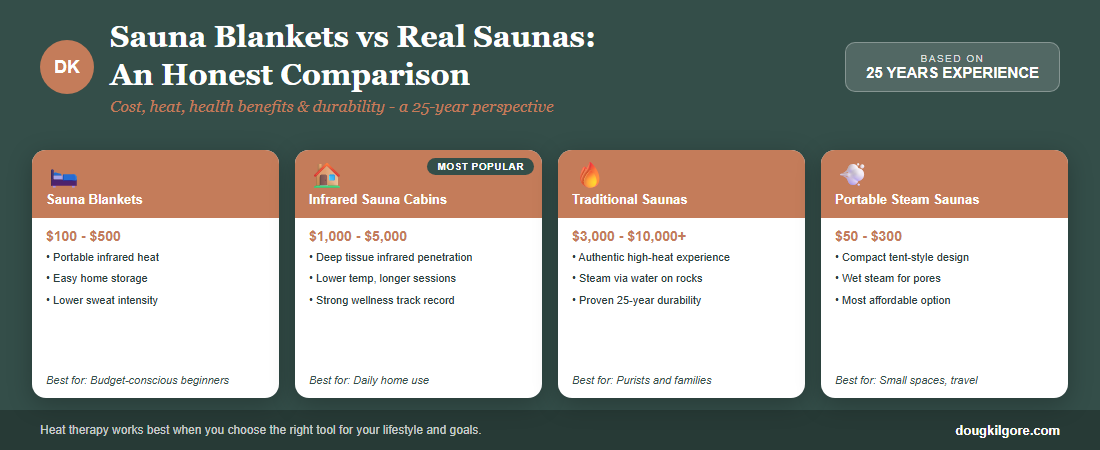
Sauna Blankets vs Real Saunas: An Honest Comparison After 25 Years of Heat Therapy
The first time I ever sat in a sauna was 1999. A traditional sauna at a small gym, around 190°F. I lasted 8 minutes before I felt overwhelmed and had to get out. Twenty-five years later, I’ve owned an infrared sauna, used a portable steam sauna for two years, and currently sit in a traditional sauna 2 to 3 times per week at 180°F for 20 minutes. I’ve spent thousands of hours in real saunas across every major type. So when people ask me about sauna blankets vs real saunas, I have opinions, and they’re grounded in more sweat sessions than I can count.
Here’s the thing: this isn’t a “blankets are bad” article. It’s also not a “blankets are just as good” article. The honest answer is more nuanced than either camp wants to admit. Sauna blankets deliver real benefits for certain people in certain situations. But they are fundamentally different from sitting inside a full sauna, and pretending otherwise does you a disservice. Let me break down exactly how each works, what the research actually says, what I’ve experienced firsthand, and who should buy what.
Affiliate Disclosure: This post contains affiliate links. If you purchase through these links, I may earn a small commission at no extra cost to you. I’ve used real saunas for 25+ years. I have not personally used the specific blanket models reviewed below, but I’ve researched them extensively and compared them against what I know from decades of real sauna experience. My recommendations are based on honest assessment, not commissions.
Quick Comparison: Sauna Blankets vs Real Saunas at a Glance
Before we dive into the details, here’s the side-by-side snapshot. This table covers the core differences between sauna blankets and real saunas across every factor that actually matters.
| Factor | Sauna Blankets | Real Saunas (Infrared Cabin) | Real Saunas (Traditional) |
|---|---|---|---|
| Temperature Range | 86–176°F | 120–150°F | 150–200°F |
| Body Coverage | Torso + upper legs only | Full body (all sides) | Full body + head + airways |
| Sweat Onset | ~15–20 minutes | ~10–15 minutes | ~5 minutes |
| Entry Price | $299–$699 | $4,499–$14,999 | $4,499–$6,500+ (plus install) |
| Lifespan | 1–3 years | 15–20+ years | 20+ years |
| Space Required | None (folds into closet) | ~16–25 sq ft + clearance | Outdoor space + foundation |
| Installation | Unbox and use | Assembly (2–5 hrs), may need electrician | Assembly + 240V electrician ($500–$1,500) |
| Research Backing | Limited (1 notable sleep study) | Moderate (infrared-specific studies) | Strong (20-year JAMA longevity study) |
| Heart Rate Response | Mild elevation | Moderate (80–120 bpm) | Significant (100–150 bpm) |
| Best For | Renters, travelers, tight budgets, sleep improvement | Dedicated home users wanting full-body infrared | Committed users wanting maximum health benefits |
Sauna Blankets vs Infrared Cabin vs Traditional Sauna
Key specs compared across the three main heat therapy options
Data sourced from article research and 25+ years of personal sauna experience
dougkilgore.com
How Each Actually Works (and Why It Matters)
Traditional saunas heat the air around you using an electric heater (or wood fire) and heated stones. The room reaches 150 to 200°F, and your entire body, including your head and airways, is immersed in that heat. You can throw water on the stones for steam (called löyly in Finnish tradition), which spikes the perceived temperature dramatically. When I sit in my gym’s traditional sauna at 180°F, my heart rate climbs noticeably within 5 minutes and I’m sweating heavily by minute 8. It’s a full-body cardiovascular event.
Infrared sauna cabins skip heating the air and use carbon or ceramic panels to emit infrared radiation that penetrates about 1.5 inches into your skin. The cabin air stays cooler (120 to 150°F), but your core body temperature still rises. When I owned my infrared sauna, I had to set it to 140°F and wait a full 25 minutes for it to preheat before I could even start my session. At 130°F? Nothing. No sweat at all. That calibration process took real experimentation.
Sauna blankets use the same infrared technology as cabins, but in a flat, wrap-around format. You lie inside the blanket and the infrared elements heat your torso and upper legs. Your head, arms (depending on position), and lower legs get minimal or no direct infrared exposure. The blankets typically draw 350 to 420 watts, which is roughly what a microwave uses. Compare that to a traditional 9 kW heater, which draws 20 times more power. Less energy input means less thermal stress on your body, which is both the advantage and the limitation.
Heat Distribution: The Biggest Difference Nobody Talks About
This is the factor that matters most and gets the least attention in most comparisons. In a traditional or infrared cabin sauna, heat surrounds you from every direction. Your arms, your back, your shoulders, your neck, your chest, your legs, your feet. Every surface of your body is receiving thermal input simultaneously. In a traditional sauna, your head is also immersed, meaning you’re breathing heated air, which further raises core temperature.
In a blanket, you’re getting direct infrared to maybe 60% of your body surface area. Your head is completely outside the heat. Your arms are often partially outside depending on how you position yourself. Think of it like the difference between swimming in a heated pool and wrapping a heating pad around your midsection. Both warm you up. Only one raises your core temperature aggressively enough to trigger the cardiovascular response that drives the biggest health benefits.
I experienced this distinction firsthand, even between my portable steam sauna (where my head stuck out the top) and a traditional sauna. The steam sauna was surprisingly effective. I could get a good sweat in under 10 minutes, and my head would sweat profusely even though it was outside the unit. But when I eventually got back to a traditional sauna at the gym, the difference in intensity was immediate and obvious. The full-body immersion, the heated air, the way your heart rate responds. There’s no comparison.
Sweating and the “Detox” Question
Let me be straight with you about “detox.” Your liver and kidneys primarily handle detoxification, not your sweat glands. Sweat contains trace heavy metals, but the volume is minimal compared to what your kidneys excrete through urine. In fact, increased sweating can actually decrease urine output, potentially reducing total toxin clearance. The “sweat out toxins” marketing language is a standard technique for wellness products that lack measurable clinical claims. The FDA has even issued warning letters to blanket manufacturers making unsubstantiated weight loss and detox claims.
That said, sweating does matter, just not for the reasons marketers claim. A deep sweat session reflects genuine thermal stress, which triggers real physiological responses: increased blood flow, improved circulation, reduced inflammation, and stress hormone regulation. The question is how much thermal stress each method delivers.
Traditional saunas at 180°F produce heavy, dripping sweat within 5 minutes for most adapted users. Infrared cabins at 140°F get you there in 10 to 15 minutes. Blankets? Expect 15 to 20 minutes before you’re sweating meaningfully, and the sweat will be concentrated on your torso rather than full-body. All three make you sweat. The difference is in the intensity and comprehensiveness of that response.
Health Benefits: What the Research Actually Shows
This is where honesty matters most. The strongest sauna research in existence is the University of Eastern Finland / JAMA Internal Medicine study, which followed 2,300 men over 20 years. Sauna use 1 time per week correlated with 49% all-cause mortality. Using a sauna 2 to 3 times per week dropped that to 38%. Using it 4 to 7 times per week? 31%. That’s a dose-dependent reduction in cardiovascular disease, stroke, and all-cause death.
Here’s what most sauna blanket articles conveniently leave out: that study was conducted with traditional Finnish saunas, not blankets. No comparable long-term blanket-specific cardiovascular research exists. This is the single most important evidence gap in the entire comparison. When a blanket company cites “sauna health benefits” in their marketing, they’re borrowing credibility from research conducted on a fundamentally different modality.
Where Blankets Do Have Research Support
To be fair, blankets aren’t completely without clinical evidence. A peer-reviewed study published in 2024 found that 14 consecutive days of far-infrared blanket use significantly increased deep sleep and REM duration, with elevated blood serotonin and melatonin concentrations. That’s a meaningful finding. I can tell you from personal experience that sauna use dramatically improves my sleep. On the days I use my traditional sauna at the gym, I sleep noticeably better. If blankets deliver even a portion of that sleep benefit, that’s real value.
Additionally, research on infrared heat exposure (broadly, not blanket-specific) shows benefits for reducing delayed-onset muscle soreness (DOMS), accelerating neuromuscular recovery, and promoting heat shock protein synthesis. These mechanisms apply to blankets to some degree, though full-body coverage in a cabin or traditional sauna delivers more comprehensive results. If you’re interested in how sauna use fits into a workout routine, I’ve written about how often you should sauna based on my own experimentation.
The Cardiovascular Comparison
Traditional sauna sessions raise heart rate to 100 to 150 bpm and dilate blood vessels, producing a measurable post-session drop in systolic blood pressure. An 8-week study found that adding just 15 minutes of sauna after exercise 3 times per week significantly enhanced cardiovascular fitness and blood pressure reduction compared to exercise alone. Blankets produce a milder cardiovascular response because the thermal stress is lower and covers less body area. They’re not useless for cardiovascular health, but they’re operating at a lower intensity than what drove the landmark Finnish research.
The Weight Loss Myth
A 60-minute blanket session burns roughly 200 to 300 calories, comparable to a brisk walk. A traditional sauna session at 170°F or higher may burn slightly more due to greater cardiovascular stress, but the difference is modest. Acute weight loss after any sauna session is almost entirely water that returns the moment you rehydrate. Neither saunas nor blankets are fat-loss tools. If weight loss is your primary goal, redirect that money toward a gym membership and nutrition coaching. I say this as someone who has used saunas consistently for over two decades and still works out 3 times per week separately.
The Session Experience: What It Actually Feels Like
Experience matters because it drives consistency, and consistency drives results. Here’s how each feels based on my years of real use.
Traditional sauna: You walk into a wall of dry heat. Within 2 minutes your skin feels hot. By minute 5, you’re sweating. By minute 10, you’re in a meditative state where the heat forces you to be completely present. You can’t scroll your phone. You can’t multitask. It’s you and the heat. When I finally settled into my current routine of 20 minutes at 180°F, I noticed my stress level dropped more than it had in years. There’s something about that level of intensity that forces your nervous system to downshift. The post-session feeling, stepping out, cooling down, the deep sense of calm, is unlike anything else I’ve found in 25 years of wellness experimentation.
Infrared cabin sauna: Gentler. You feel warmth radiating from the panels but the air is cooler. It takes longer to start sweating (I found 15 minutes at 140°F before I really got going). The experience is more comfortable and less intense. Some people prefer this. I found it a bit too slow and time-consuming. Between the 25-minute preheat and the slower sweat onset, I felt like I was spending a lot of time for moderate results. After 10 years of regular use at 3 to 4 times per week, I started dropping to 1 to 2 times per week because the time investment didn’t feel proportional to the benefit.
Sauna blankets: You lie flat, zip or wrap yourself in, and wait. The heat builds gradually around your torso. Your head stays cool, which is comfortable but also reduces the immersive quality. You can watch TV, listen to a podcast, or scroll your phone. That accessibility is both the appeal and, in my opinion, the potential pitfall. The meditative, forced-presence quality of a real sauna, the thing that drove the biggest stress reduction and sleep benefits for me, is largely absent when you’re lying on your couch catching up on Netflix.
Cost Comparison: The Real Math Over Time
This is where most comparisons oversimplify. The upfront price difference is obvious. But the 5-year and 10-year cost picture tells a very different story.
| Cost Factor | Sauna Blanket | Infrared Cabin (Entry) | Traditional Barrel Sauna |
|---|---|---|---|
| Purchase Price | $299–$699 | $4,499–$7,698 | $4,499–$6,500 |
| Installation | $0 | $0–$1,500 (if 240V needed) | $500–$3,000 (electrical + foundation) |
| Annual Electricity | ~$40 | ~$40–$80 | ~$150–$300 |
| Replacement Cost (5 yrs) | $299–$699 (at year 2–3) | $0 | $0 |
| 5-Year Total | ~$800–$1,600 | ~$4,700–$8,100 | ~$5,750–$10,000 |
| Lifespan | 1–3 years per unit | 15–20+ years | 20+ years |
| 10-Year Per-Session Cost* | ~$2.00+ (with replacements) | ~$2.50–$4.00 (declining) | ~$3.00–$5.00 (declining) |
*Per-session cost assumes consistent use. Blanket cost includes replacement units. Real sauna cost amortizes over time with no replacement needed.
The key insight: at the 10-year mark, a real sauna’s per-session cost drops below a blanket’s cumulative cost when you factor in replacements. Blankets last 1 to 3 years with regular use. Common failure points include heating element degradation, waterproof lining delamination, zipper failure, and electronic control malfunction. They cannot be repaired. You replace the entire unit. A quality infrared cabin’s carbon heaters last 15,000 to 50,000 hours. My infrared sauna ran for about 10 years with zero maintenance issues before I sold it (a decision I still regret).
I also learned the hard way about hidden installation costs. When I looked into getting a traditional sauna at home, the dedicated 20-amp circuit alone was quoted at $1,200. The heater price was only part of the story. If you want a deeper breakdown of all the costs involved, I wrote a full guide on how much a sauna actually costs.
The Consistency Factor: The Benefit Nobody Measures
Here’s something I’ve never seen another comparison article address, and it might be the most important factor of all. Many blanket buyers report initial enthusiasm declining to sporadic use (1 to 2 times per month) within 3 to 6 months. The “always available” convenience paradoxically undermines habit formation. When something is easy to do later, you do it later. Then later becomes never.
I’ve lived this pattern myself, though with a different device. When my infrared sauna was always there in the house, I gradually dropped from 3 to 4 times per week to 1 to 2, then to occasional use. Life got busy, and the sauna just sat there. It was always available, so it was always deferrable. But, I attributed this more to the additional time involved in using an infrared unit. Meanwhile, my current routine at the gym sauna is more consistent because I go there on purpose, on schedule. The commitment of a specific time and place creates the consistency that drives results.
However, some home sauna owners frequently increase usage from 2 to 3 times per month (when using gym or spa saunas) to 4 to 7 times per week with a home unit, because the dedicated space creates a ritual. A blanket folded in a closet doesn’t create that same sense of ritual. This doesn’t mean blankets can’t work for disciplined people. It means you should be brutally honest with yourself about your track record with convenient-but-optional wellness tools. The Finnish longevity benefits kicked in at 4 to 7 sessions per week. That’s the frequency bar you’re aiming for.
Sauna Blankets Worth Considering
If after weighing all of this, a sauna blanket is the right fit for your situation (budget, space, rental situation), these are the four I’d point you toward. I haven’t personally used these specific blanket models, but I’ve researched them against what I know about infrared heat therapy from 25 years of real-world sauna use. For a deeper dive into blankets specifically, check out my full best portable saunas roundup.
HigherDOSE Infrared Sauna Blanket
The most recognized name in sauna blankets, with premium build quality and layered infrared technology.
Key Features
- Far-infrared heating with charcoal, clay, amethyst, and tourmaline crystal layers
- 8 adjustable heat levels up to 158°F for customized sessions
- Low-EMF design for safety-conscious users
- Premium build quality with extensive user base (2,000+ reviews at 4.5 stars)
Why It Made the List
HigherDOSE is the brand most people associate with sauna blankets, and there’s a reason for that. The layered construction with charcoal and clay is designed for even heat distribution, which matters when you’re trying to maximize infrared penetration from a flat surface. The 2,000+ review count with a 4.5-star average gives you a large sample of real-world user experiences to draw from, which is more than most blanket brands can claim.
Reality Check
At $699, this is the most expensive blanket on this list, and it’s still a blanket. The 158°F max temperature is the lowest of the four options here. With a 1 to 3 year lifespan under regular use, you could end up spending $1,400+ over 5 years for partial-body infrared coverage.
- Best-known brand with massive verified review base
- Multi-layer construction for even heat distribution
- Low-EMF certified for peace of mind
- Highest price among blankets listed ($699)
- Lower max temperature (158°F) than competitors
- Still limited to 1–3 year lifespan with regular use
If you’re going to buy a sauna blanket and want the brand with the longest track record and largest user community, HigherDOSE is the safest bet. Just know you’re paying a premium for the name.
Sun Home Saunas Infrared Sauna Blanket V5
Named Best Infrared Blanket of 2025 by Rolling Stone, Variety, and WWD, with ultra-low EMF and a wide temperature range.
Key Features
- Ultra-low EMF technology with wide 95–167°F temperature range
- Dual Celsius/Fahrenheit display for precise temperature control
- Award-winning design recognized by Rolling Stone, Variety, and WWD
- 30-day money-back guarantee reduces purchase risk
Why It Made the List
The Sun Home V5 hits the sweet spot between the premium HigherDOSE and budget options. The 95–167°F range gives you more flexibility than most blankets, and the ultra-low EMF design addresses the concern I hear most often from readers. At $499, it’s $200 less than the HigherDOSE with higher max temperature and comparable build quality. The smaller review count (204) is the main trade-off, but the 4.9-star average from that sample is impressive.
Reality Check
Newer brand means less long-term durability data. The smaller review sample, while very positive, doesn’t give you the same confidence as 2,000+ reviews. Still a blanket with the same fundamental coverage limitations as every other option in this category.
- Best balance of price, performance, and features
- Ultra-low EMF with wide temperature range
- 30-day money-back guarantee lowers risk
- Smaller review sample (204 vs. 2,000+)
- Less long-term durability data than established brands
My top blanket recommendation. Best combination of specs, price, and user satisfaction, with a money-back guarantee that takes the risk out of trying it.
LifePro RejuvaWrap Infrared Sauna Blanket
Highest max temperature of any blanket listed, with a lifetime warranty that addresses the biggest blanket drawback.
Key Features
- Highest max temperature at 176°F with 9 adjustable heat levels
- Lifetime warranty directly addresses blanket durability concerns
- Low-EMF carbon fiber heating elements
- Includes carrying bag and disposable thermal wraps for convenience
Why It Made the List
The LifePro addresses the two biggest blanket objections: limited heat and short lifespan. At 176°F max, it delivers more thermal intensity than the HigherDOSE (158°F) at nearly half the price. And the lifetime warranty is the standout differentiator. When the typical blanket lifespan is 1 to 3 years, a warranty that covers replacement fundamentally changes the cost-per-session math. Combined with 2,000+ reviews at 4.4 stars and the included accessories, this is the strongest overall value proposition in the blanket category.
Reality Check
Lifetime warranty claims are only as good as the company behind them. Read the warranty terms carefully. The 176°F max is also “rated max,” meaning actual surface temperature against your body may vary. Still, at $400, this is the easiest blanket to justify financially.
- Lifetime warranty eliminates replacement cost concerns
- Highest max temperature (176°F) at lowest mid-range price
- 2,000+ verified reviews provide strong confidence
- Warranty quality depends on long-term company viability
- Actual body-contact temperature may be lower than rated max
The best value in sauna blankets. The lifetime warranty, highest max temp, and sub-$400 price make this the one to beat if you’ve decided a blanket is right for you.
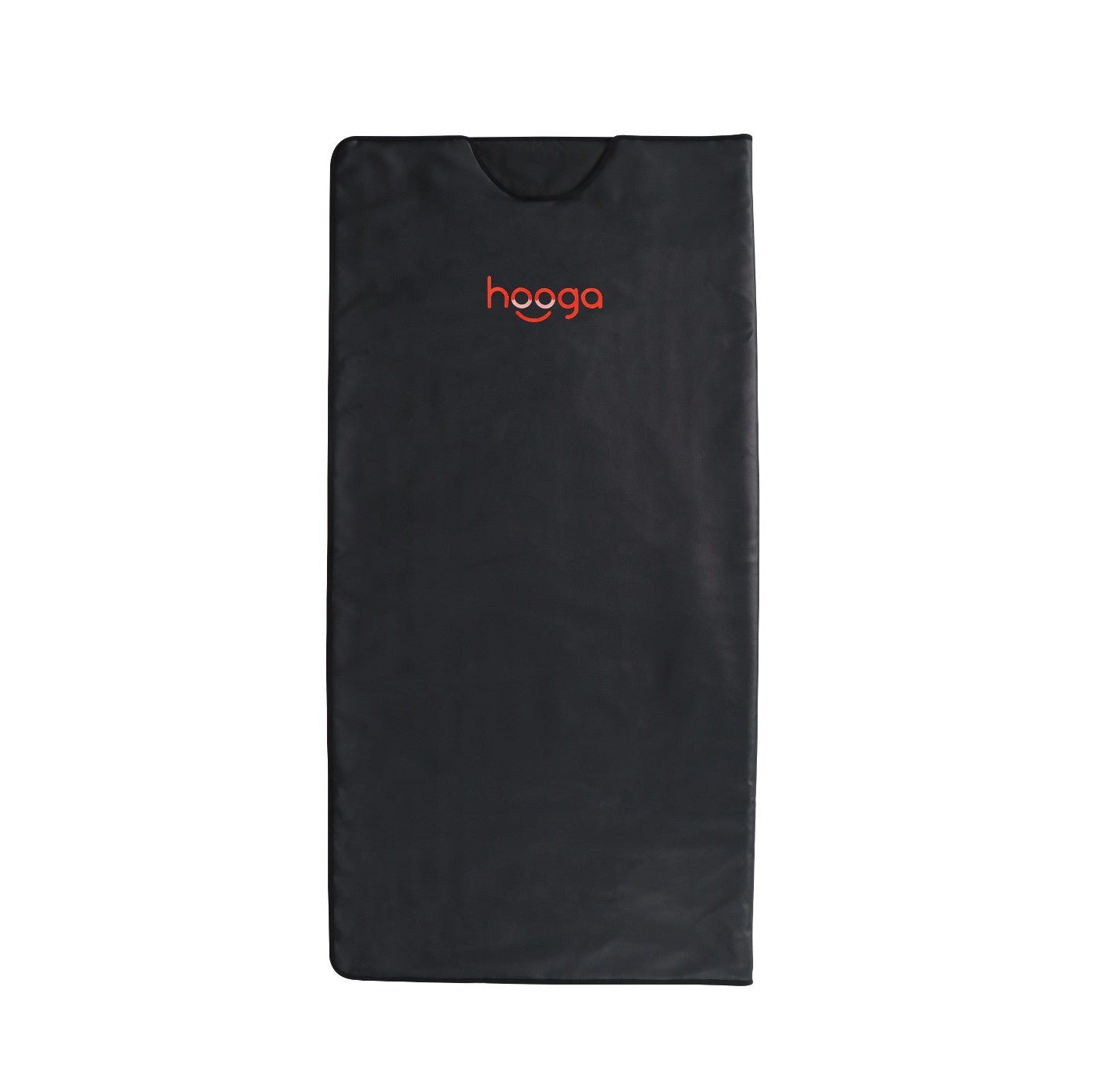
Hooga Infrared Sauna Blanket
Professional-grade features at the lowest price point, with ultra-low EMF and the widest temperature range available.
Key Features
- Ultra-low EMF output (0–0.08uT), the best published EMF number on this list
- Widest temperature range at 86–176°F for gradual ramp-up
- Heavy-duty PU leather construction with built-in timer
- Most affordable option at $299 without sacrificing core performance
Why It Made the List
At $299, the Hooga delivers specs that compete with blankets costing twice as much. The 86–176°F range is the widest here, and the published EMF measurement of 0–0.08uT is the most specific and reassuring data point I’ve seen from any blanket brand. If you’re testing whether a sauna blanket fits your lifestyle before committing more money, this is the lowest-risk entry point with legitimate performance.
Reality Check
Smaller review base (500+) than the HigherDOSE or LifePro. At this price point, build quality and longevity may lag behind the $400+ options. Budget for a potential replacement within 1 to 2 years of regular use.
- Lowest price ($299) with high max temperature (176°F)
- Best published EMF data (0–0.08uT)
- Widest temperature range for gradual adaptation
- Smaller review sample than top competitors
- May have shorter lifespan at this price tier
The best way to test whether a sauna blanket works for you without a significant financial commitment. Strong specs for the price.
Real Saunas Worth the Investment
If you have the space, the budget, and the intention to use a sauna consistently (4+ times per week), a real sauna delivers benefits that blankets simply cannot match. I’ve owned an infrared sauna, used a portable steam sauna for two years, and have been using a traditional sauna at my gym 2 to 4 times per week for the past several years. The difference in how I feel, how I sleep, and how my skin looks compared to any portable or partial-coverage option is significant. For more options, check my full guides on the best home saunas and best infrared saunas.
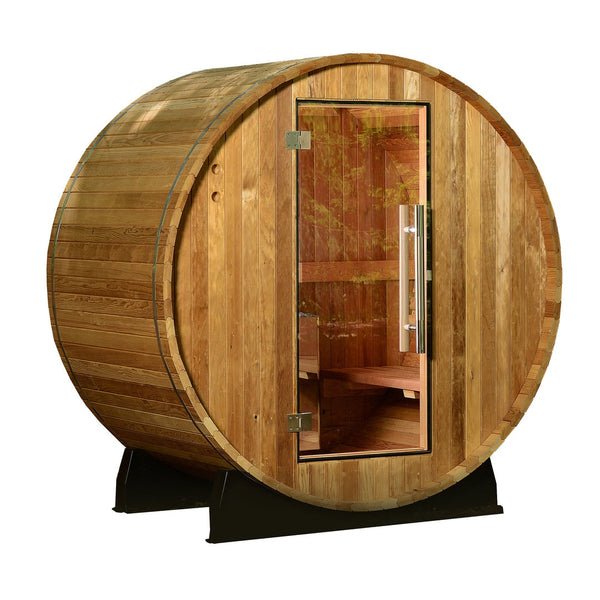
Almost Heaven Salem 2-Person Barrel Sauna
Handcrafted in the USA from premium Western red cedar with a Harvia 6kW heater for authentic Finnish-style heat.
Key Features
- Handcrafted in the USA from premium Western red cedar
- Harvia 6kW heater (the gold standard in sauna heaters) reaches 180–200°F
- Weather-resistant barrel design for year-round outdoor use
- Authentic löyly capability (pour water on stones for steam)
Why It Made the List
This is the closest thing to the traditional sauna experience I use at my gym, in a home-installable package. The Harvia heater is the same brand trusted in Finnish saunas worldwide. At 180–200°F with stones for steam, this delivers the full cardiovascular response, the heavy sweating by minute 5, the heart rate climbing to 100–150 bpm, that drives the health benefits documented in the landmark Finnish longevity research. The barrel design is also beautiful. It becomes a backyard focal point, not just a wellness tool.
Reality Check
Requires outdoor space, a level foundation ($200–$2,000 for prep), and a 240V electrical circuit ($500–$1,500 for installation). Total cost including installation easily reaches $5,500 to $7,000+. The 45 to 60 minute heat-up time also means you need to plan sessions in advance. This is a commitment, not a convenience purchase.
- Authentic traditional sauna experience with full löyly capability
- Harvia heater delivers the temperatures that research supports
- Made in USA with premium materials; 20+ year lifespan
- Requires outdoor space + foundation + 240V electrical
- Total installed cost: $5,500–$7,000+
- 45–60 minute heat-up time requires planning
The real deal. If you want the health benefits that decades of Finnish research have documented, this is the entry point for a home traditional sauna that actually delivers. Check out my full best outdoor saunas guide for more options.
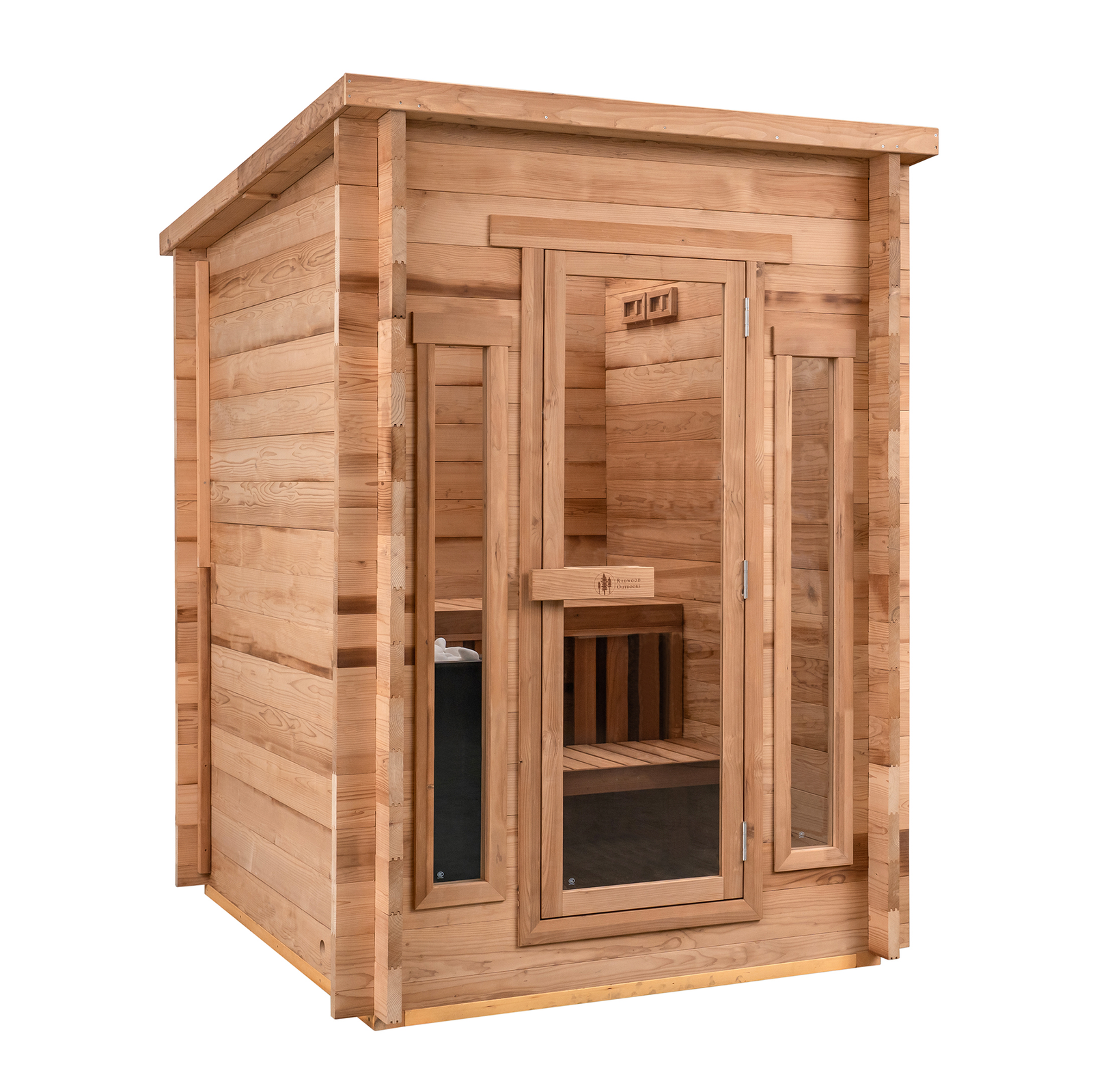
Redwood Outdoors 4-Person Cabin Sauna
Named Men’s Fitness “Best Sauna Overall 2026” with two-level seating, gravity venting, and Harvia heater.
Key Features
- Two-level seating for temperature preference control (higher bench = hotter)
- Gravity venting system for proper air circulation and even heat
- Harvia electric heater for reliable, consistent performance
- Compact cabin design suitable for smaller backyards with DIY assembly
Why It Made the List
The cabin design with two-level benching is exactly what you’d find in a proper Finnish sauna. Sitting on the upper bench puts you in the hottest zone, while the lower bench offers a milder experience for guests or cooler sessions. The gravity venting system is a smart engineering feature that maintains even heat distribution. At $6,500, it’s more than the barrel sauna but provides significantly more interior space and a more traditional sauna room experience for up to 4 people.
Reality Check
The 4.1-star rating (145 reviews) is the lowest on this list, suggesting some quality control inconsistencies. Same installation requirements as any outdoor traditional sauna: 240V electrical, level foundation, potentially electrical trenching. Total project cost can reach $8,000 to $10,000 depending on your property.
- Two-level seating for a more authentic sauna room experience
- 4-person capacity makes it social and versatile
- Professional customer support and DIY-friendly assembly
The best option if you want a true sauna room experience at home with space for friends or family. The two-level design gives you the temperature flexibility that single-bench options lack.
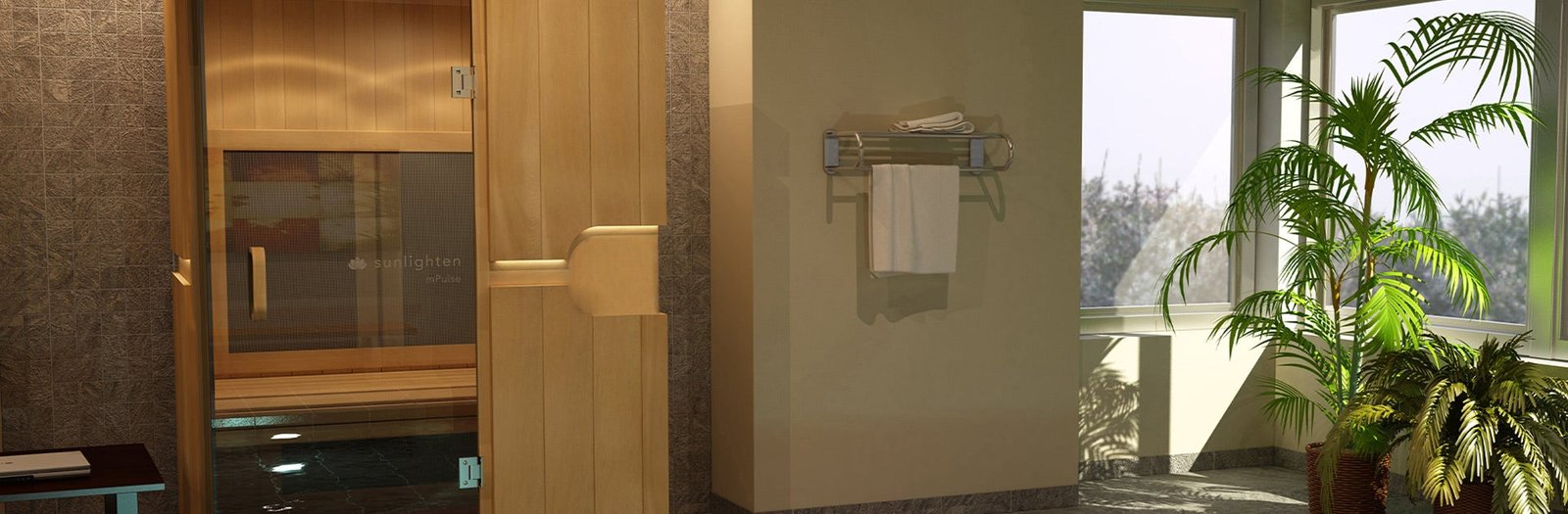
Sunlighten mPulse Believe 2-Person Smart Sauna
The only true full-spectrum infrared sauna with customizable wavelengths, tablet control, and clinically-backed wellness programs.
Key Features
- True full-spectrum infrared with independently customizable near, mid, and far wavelengths
- 6 preset wellness programs based on clinical studies (detox, relaxation, cardiovascular, etc.)
- Built-in red light therapy and medical-grade chromotherapy lighting
- Tablet-controlled with ultra-low EMF technology
Why It Made the List
If I were buying an infrared sauna today, knowing what I know after owning one for 8 years, this is where I’d look seriously. The full-spectrum capability means you’re not limited to far-infrared only. The preset wellness programs take the guesswork out of session optimization, something I spent months figuring out through trial and error with my old infrared sauna. The 4.9-star rating from 200+ reviews suggests Sunlighten has figured out how to deliver on the promise. For anyone interested in how infrared compares to traditional saunas, this represents the best of what modern infrared technology can do.
Reality Check
At $7,698 this is a serious investment. It’s still an infrared cabin, meaning air temperatures are lower than traditional saunas and you won’t get the löyly (steam) experience. The technology is impressive, but it doesn’t fundamentally change the infrared-vs-traditional dynamic. You’re paying for the most refined version of an infrared experience, not a replacement for traditional sauna heat.
- Only true full-spectrum sauna with customizable wavelengths
- Clinical study-backed preset programs remove guesswork
- 4.9-star average from 200+ reviews
- $7,698 price point is a major commitment
- Still infrared cabin temperatures (not traditional heat levels)
The most advanced infrared sauna available. If you’re committed to infrared as your modality and want the absolute best technology, this is it.
Clearlight Sanctuary 2 Full Spectrum Infrared Sauna
Doctor-designed with the industry’s lowest EMF/ELF levels and a lifetime heater warranty.
Key Features
- True Wave™ heaters delivering near, mid, and far infrared wavelengths
- Industry’s lowest published EMF and ELF levels for maximum safety
- Lifetime warranty on heaters (15,000–50,000 hour lifespan)
- Medical-grade chromotherapy lighting and smartphone app control
Why It Made the List
Clearlight has been the gold standard in home infrared saunas for years, and the Sanctuary 2 is their flagship. The lifetime heater warranty is the standout feature. When I owned my infrared sauna, it ran reliably for 10 years with zero heater issues, so durability matters over the long haul. Clearlight’s EMF testing is the most rigorous in the industry, and for readers who prioritize that safety dimension, nothing else comes close. The doctor-designed approach to heater placement means more even, full-body infrared coverage than budget cabins.
Reality Check
At $7,399, you’re paying Clearlight’s brand premium. The Sunlighten mPulse is similarly priced with arguably more advanced technology (tablet control, 6 preset programs). Both are excellent. This comes down to whether you prioritize Clearlight’s EMF testing leadership and lifetime warranty or Sunlighten’s programmable wellness features. Either way, you’re spending $7,000+ on an infrared cabin.
- Industry-best EMF/ELF testing and certification
- Lifetime heater warranty provides decade-plus confidence
- Doctor-designed heater placement for optimal coverage
- Premium price ($7,399) with strong competition at this tier
- Heavy unit (~400 lbs) requiring dedicated space and potentially help with setup
The safest, most tested infrared sauna you can buy. If EMF concerns are your top priority and you want a cabin that will last decades, Clearlight remains the benchmark.
Sun Home Luminar 5-Person Outdoor Full-Spectrum Infrared Sauna
Named “Best Outdoor Sauna” by Forbes and Variety, with 15 heaters, aerospace-grade construction, and 10-minute heat-up time.
Key Features
- 15 full-spectrum infrared heaters for maximum body coverage from every angle
- Aerospace-grade aluminum exterior built for year-round outdoor use
- 10-minute heat-up time (compare to 25+ minutes for most infrared cabins and 45–60 for traditional)
- Mobile app control and medical-grade chromotherapy lighting
Why It Made the List
One of my biggest complaints with my old infrared sauna was the 25-minute preheat time. By the time it was ready, I’d sometimes lose motivation. The Luminar’s 10-minute heat-up solves that problem. The 15-heater array addresses the other infrared limitation I experienced: uneven heat. With panels surrounding you from every direction, the coverage approaches what you’d get in a traditional sauna. The outdoor-rated aerospace aluminum construction means this can live in your backyard year-round. At $14,999, this is clearly the aspirational pick, but for the person who wants infrared technology at its absolute peak, nothing else combines this many heaters with outdoor durability.
Reality Check
$14,999 is serious money. Only 31 reviews, which limits the real-world data you can draw from. At this price, you could buy a traditional barrel sauna AND a premium infrared cabin. The 5-person capacity is generous, but the price-per-seat is astronomical. This is for the buyer who has already decided on outdoor infrared and wants the best available, not for anyone still weighing whether to invest in a sauna at all.
- 15 heaters provide the most comprehensive infrared coverage available
- 10-minute heat-up time removes a major infrared friction point
- Aerospace-grade outdoor construction for all-weather durability
- $14,999 price puts it out of reach for most buyers
- Only 31 reviews limits long-term reliability data
- Still infrared (not traditional) despite the premium price
The pinnacle of outdoor infrared sauna technology. If money is not the primary constraint and you want the fastest, most comprehensive infrared experience available, this is the top of the market.
My Honest Assessment After Using Real Saunas for 25 Years
What I Love About Real Saunas
The full-body immersion is irreplaceable. When I walk into my gym’s traditional sauna at 180°F, every square inch of my body is receiving heat simultaneously. My skin, my airways, my scalp. The cardiovascular response is immediate and significant. My heart rate climbs, my blood vessels dilate, and by the time I walk out 20 minutes later, I feel like I’ve had a reset. My stress level drops more than it has from anything else I’ve tried in 25 years of wellness experimentation.
The skin benefits are dramatic and visible. After going for a couple of weeks on a regular basis with my current traditional sauna routine, I noticed my skin start to look very healthy with no dryness at all. When I stopped using saunas regularly (after selling my infrared), the first thing I noticed was drier skin, especially on my arms. It looked flaky, almost like after a sunburn. That visible change alone told me something real was happening physiologically.
Sleep quality improves noticeably. On the days I use my traditional sauna, I sleep much better. This is one of the most consistent and reliable benefits I’ve experienced. I should note that timing matters significantly. I discovered that late-day sessions negatively affected my sleep, which is why I now go over my lunch break. If you’re interested in optimizing your sauna routine, I wrote about finding the right sauna temperature and what I learned through years of experimentation.
Real Sauna Limitations I’ve Experienced
Installation is a bigger project than you expect. When I looked into getting a traditional sauna at home, the dedicated 20-amp circuit alone was quoted at $1,200. The sauna heater/kit price turned out to be only 50 to 70% of the total cost once I factored in electrical work, space prep, and ventilation. I talked myself out of it. Even my infrared sauna, which was supposedly “plug and play,” tripped my circuit breaker on the first use because the 1,500-watt draw spiked above the 1,800-watt capacity of my standard 15-amp outlet. I spent months unplugging everything else on the circuit as a workaround.
The time investment is real. My infrared sauna needed 25 minutes to preheat, then 30 minutes for the session. That’s nearly an hour of your day for one session. After 5 years of doing this 3 to 4 times per week, I started feeling like the time wasn’t proportional to the benefit. This is why I eventually dropped to 1 to 2 times per week and then occasional use before selling it.
Consistency requires structure. Having a sauna “right there” in my house didn’t guarantee I’d use it. I gradually drifted from regular sessions to occasional ones as life got busy. My current gym sauna routine works because it’s attached to a scheduled commitment (going to the gym over lunch). The sauna alone wasn’t enough to sustain the habit.
Where Sauna Blankets Make Sense
I want to be fair. Blankets aren’t my preferred modality, but they address real barriers that kept me from consistent sauna use during certain periods of my life. When I spent a couple of years unable to justify the installation costs for a traditional sauna, a blanket could have filled that gap. For renters, apartment dwellers, and people with tight budgets, a blanket delivers genuine infrared therapy benefits: improved sleep, relaxation, some recovery support. The 2024 clinical study showing significant sleep improvements from 14 days of blanket use is real evidence, not marketing fluff.
Where Blankets Fall Short
Partial body coverage means partial results. Arms, shoulders, neck, head, and lower legs get minimal infrared exposure. The cardiovascular response is milder. The meditative, forced-presence quality of sitting in 180°F heat, the thing that has done more for my stress than anything else, is absent when you’re lying on a couch watching TV. And the durability gap is significant: 1 to 3 years for a blanket versus 15 to 20+ years for a quality cabin. Factor in replacements, and the cost-per-session math eventually favors a real sauna for consistent users.
The Decision Framework: Choose What’s Right for You
Choose a Sauna Blanket If:
• You’re renting and can’t install permanent equipment
• Your budget is under $700 and a real sauna is years away
• Space is genuinely limited (apartment, small home, no yard)
• Sleep improvement and relaxation are your primary goals
• You travel frequently and want something portable
• You want to test whether heat therapy works for you before committing thousands
Choose a Real Sauna If:
• You own your home and plan to stay long-term
• You can commit to 4+ sessions per week (the frequency that drives longevity benefits)
• Cardiovascular health, stress reduction, and skin health are priorities
• You value the full-body immersion experience, including heated airways
• You’re thinking in 10-year terms, not 10-month terms
• You want the ritual and dedicated space that drives consistency
⚠️ The mistake I see most often: buying a blanket “for now” with plans to upgrade to a real sauna later. Most people who do this never upgrade. The blanket becomes the permanent (and often underused) solution. If you know you want a real sauna, save for it. I learned from my own experience that half-measures in sauna practice lead to declining use. For a deeper look at my full journey and the lessons I learned the hard way, read my 25 years of sauna experience story.
Lessons From 25 Years of Heat Therapy
- The best sauna is the one you’ll actually use 4+ times per week. For some people, that genuinely is a blanket. For most committed users, it’s a dedicated space.
- Temperature calibration takes experimentation. My infrared sauna at 130°F produced zero sweat. At 140°F, it worked. You need to test and adjust, regardless of modality.
- Time of day matters more than you’d expect. Late-day sauna sessions negatively affected my sleep. Switching to lunch-hour sessions made the sleep benefits consistent.
- Benefits disappear quickly without consistency. When I stopped regular sauna use, I noticed drier skin within weeks and reduced energy that felt like I’d quit exercising, even though I was still working out 3 times per week.
- Electrical requirements are not trivial. Research wattage, amperage, and circuit capacity before buying anything that plugs in. My first infrared session tripped the breaker.
- Don’t sell your sauna. I sold my infrared sauna during a difficult period, and I’ve regretted it ever since. That regret was a wake-up call about how much value I was getting from regular practice.
- Maintenance varies dramatically by type. My infrared sauna needed almost zero cleaning. My portable steam sauna needed cleaning every 1 to 2 weeks due to mildew. Know what you’re signing up for.
Frequently Asked Questions
Are sauna blankets as effective as real saunas?
Not fully. Blankets deliver genuine infrared heat therapy benefits, including improved sleep, relaxation, and some muscle recovery. However, partial body coverage and lower thermal stress mean they don’t replicate the cardiovascular intensity of traditional saunas. The landmark Finnish longevity study (20-year JAMA study following 2,300 men) was conducted with traditional saunas at 175°F+, not blankets. No comparable long-term blanket-specific cardiovascular research exists. Blankets are a meaningful step above doing nothing, but a step below full-body sauna immersion. From my experience, the difference in stress reduction, skin health, and overall post-session feeling between partial coverage and full-body immersion is significant.
How many calories do you burn in a sauna blanket vs a real sauna?
A 60-minute blanket session burns roughly 200 to 300 calories, comparable to a brisk walk. A traditional sauna session at 170°F or higher may burn slightly more due to greater cardiovascular stress (heart rate reaching 100 to 150 bpm), but the difference is modest. Neither replaces exercise. Acute post-session weight loss is almost entirely water that returns upon rehydration. The FDA has issued warning letters to blanket manufacturers making unsubstantiated weight-loss claims. If weight loss is your primary goal, neither option should be your main strategy.
Do sauna blankets actually help you detox?
The “sweat out toxins” claim is significantly overstated. Your liver and kidneys handle detoxification, not sweat glands. Sweat contains trace heavy metals, but the volume is trivial compared to urinary excretion. Increased sweating may actually reduce urine output, potentially lowering total toxin clearance. That said, blankets do improve circulation, promote relaxation, and support recovery. These are real, measurable benefits. They’re just not “detox” in the way most blanket marketing implies.
How long do sauna blankets last compared to real saunas?
Sauna blankets typically last 1 to 3 years with regular use (3 to 5 sessions per week). Common failure points include heating element degradation, waterproof lining delamination, zipper failure, and electronic control malfunction. They cannot be repaired and require full replacement. Quality infrared sauna cabins last 15 to 20+ years, with carbon heaters rated for 15,000 to 50,000 hours. Traditional wood saunas with proper maintenance last 20+ years. My own infrared sauna ran reliably for 8 years before I sold it. This durability gap is the biggest factor in long-term cost-per-session calculations.
Is it worth buying a sauna blanket if I plan to get a real sauna later?
It depends on your timeline. If a real sauna is 6 to 12 months away, waiting and saving is usually the better move. You’ll avoid spending $300 to $700 on a stopgap. If a real sauna is 2+ years away or uncertain, a blanket gives you meaningful heat therapy benefits now. But here’s the honest truth: most people who buy a blanket “as a bridge” never make the upgrade. I’ve seen this pattern in my own life. When I had my infrared sauna always available at home, I gradually reduced use rather than building toward something better. Be honest with yourself about which camp you’re likely in.
Can I use a sauna blanket every day?
Yes, daily use is generally safe for healthy adults after an initial ramp-up period. Start with 15 to 20 minute sessions, 2 to 3 times per week, and increase gradually over 2 to 3 weeks. Stay well-hydrated before, during, and after every session. Contraindications include unstable cardiovascular conditions, pregnancy, active infections, and severe dehydration. Consult a physician if you have chronic health conditions. For a detailed guide on session frequency and timing, check out my article on how often you should sauna.
Do sauna blankets work for muscle recovery after workouts?
Yes, with caveats. Research shows post-exercise infrared heat exposure reduces delayed-onset muscle soreness (DOMS) and accelerates recovery via heat shock protein synthesis and increased blood flow. However, blankets only cover the torso and upper legs. Arms, shoulders, and neck get limited benefit. For athletes prioritizing full-body recovery, an infrared cabin provides more comprehensive coverage. From my own experience, regular sauna use made my 3-times-per-week workouts feel more effective. When I stopped using the sauna, it felt like I had stopped working out entirely, even though my exercise routine hadn’t changed.
Sauna blanket vs infrared sauna cabin: which is better for sleep?
Both improve sleep. A 2024 clinical study showed 14 consecutive days of nightly blanket use significantly increased deep sleep and REM duration, with elevated serotonin and melatonin. Full-body infrared saunas likely produce equal or greater sleep benefits due to more robust core temperature elevation. The post-sauna temperature drop signals the body it’s time to sleep. I can confirm from personal experience that my traditional sauna routine produces dramatically better sleep on usage days. One critical factor: timing. Late-day sessions hurt my sleep rather than helping it. I had to shift to lunchtime sessions to get consistent benefit. If sleep is your number one goal, either modality works. Buy what fits your space and budget.
Final Verdict: What I’d Actually Recommend
After 25 years of using real saunas, here’s what I believe: a real sauna and a sauna blanket are not different versions of the same thing. They are different tools with different capabilities, different limitations, and different appropriate use cases. Comparing them is like comparing a home gym to a resistance band. Both provide exercise. One provides a fundamentally more complete experience.
If you can afford a real sauna and have the space, buy one. The cardiovascular benefits, the full-body heat exposure, the forced-presence meditative quality, the skin health improvements, the sleep benefits, the stress reduction I’ve experienced, none of these are fully replicated by lying in a blanket. The Finnish longevity research, the strongest evidence we have for sauna health benefits, was conducted on traditional saunas. That matters.
If a real sauna isn’t feasible right now, a blanket is a legitimate starting point. The sleep research is encouraging. The relaxation benefits are real. And $299 to $499 is a vastly lower barrier to entry than $4,500 to $15,000. Just go in with realistic expectations: you’re getting partial-body infrared therapy, not a full sauna experience. And be honest about whether you’ll actually use it consistently, or whether it’ll end up folded in a closet within 6 months.
If you’re still figuring out where to start, my guide on how to use a sauna covers everything I wish I’d known when I walked into that 190°F gym sauna back in 1999.
Still feeling stuck on which sauna is for you?
If you’re looking for clarity, my complete 23 page guide brings together everything I learned from 25 years of trying traditional, infrared, and portable saunas.